


Americans increased spending sharply in August, but persistent inflation and higher fuel costs could determine whether consumer strength lasts through the fall.
U.S. consumers entered the final stretch of summer with considerably more spending power than July’s retail figures had suggested. Retail sales increased 1.2% in August, according to data released by the Commerce Department on September 16, reversing a revised 0.5% decline in July and exceeding economists’ expectations for a 0.7% gain. The increase came even as households continued to face elevated prices, particularly at the gas pump.
The numbers matter because consumer spending remains one of the most important engines of the U.S. economy. Strong sales can support businesses, employment and economic growth, but they can also complicate the Federal Reserve’s effort to control inflation. With the Fed meeting this week, Americans are now facing a question that extends beyond Wall Street: does resilient spending signal a healthy economy, or could it keep prices and borrowing costs higher for longer?
Why did Americans spend more in August despite higher prices?
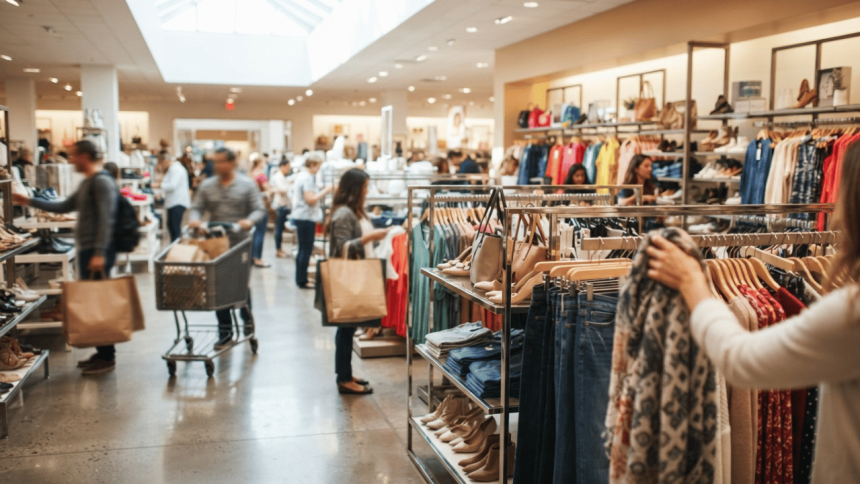
The August retail report suggests that consumers were willing to keep spending even after pulling back in July. Total retail sales rose 1.2%, while sales excluding gasoline stations increased 1.1%. The Commerce Department data also showed gains across several discretionary categories, including restaurants, electronics and sporting goods, indicating that the increase was not limited to essential purchases.
Timing also played a role. Online shopping rebounded after promotional activity, including the timing of Amazon’s Prime Day, distorted the comparison between June and July. Internet retailers recorded particularly strong activity in August, while vehicle dealers, restaurants and other consumer-facing businesses also contributed to the monthly increase. That means the latest report should not automatically be interpreted as evidence that every household has suddenly become more comfortable financially.
Inflation remains an important part of the story. The Bureau of Labor Statistics reported that consumer prices increased 0.4% in August and were 3.4% higher than a year earlier. Gasoline prices alone rose 3.9% during the month and accounted for more than one-third of the monthly increase in the overall Consumer Price Index.
For consumers, that distinction matters because higher retail sales do not necessarily mean households are buying dramatically more goods and services. Some of the increase reflects higher prices, while other spending reflects continued demand for products and experiences. Families therefore need to distinguish between nominal spending growth and an actual improvement in purchasing power, especially when fuel, food, housing and other recurring expenses continue to absorb a large portion of household budgets.
What does stronger retail spending mean for jobs, businesses and interest rates?
For businesses, the August figures provide evidence that demand has not collapsed despite higher prices and tighter financial conditions. Retailers, restaurants, transportation companies and other consumer-facing businesses depend heavily on household spending, so sustained demand can support revenue and reduce pressure to cut staffing. That is particularly relevant after the Labor Department reported that U.S. payroll employment increased by 162,000 in August, while weekly unemployment claims remained relatively low.
Small businesses may also benefit from stronger consumer activity, although the effects will not be evenly distributed. A local restaurant, online seller or service provider can gain from increased demand, but higher fuel, labor, financing and inventory costs can reduce the amount of additional revenue that becomes profit. Businesses therefore have to watch not only sales volumes but also margins, customer sensitivity to prices and the cost of maintaining operations.
The larger economic question involves the Federal Reserve. Inflation accelerated in August, with core consumer prices, excluding food and energy, rising 0.3% during the month and 2.4% over the previous year. At the same time, retail sales and employment data indicate that economic activity remains resilient. Together, those signals create a more complicated environment for monetary policy because policymakers must consider both inflation risks and the possibility that restrictive interest rates could eventually weaken demand.
For households, the connection is practical. Federal Reserve interest-rate decisions can influence credit-card costs, auto loans, business financing, savings yields and eventually other borrowing costs across the economy. A consumer planning a major purchase or a small business considering expansion may therefore find that today’s retail-sales report matters indirectly, because continued economic strength can affect the path of monetary policy and the cost of credit.
Could consumer spending remain strong through the fall?
The next challenge is determining whether August represents a durable trend or a temporary rebound. Retail sales had declined in July, and some of the August improvement was connected to the timing of promotional events. At the same time, the broader economy continues to show substantial consumer demand, meaning there are reasons to believe spending could remain relatively resilient if households continue to have jobs and income available for discretionary purchases.
Fuel prices are one of the biggest variables to watch. Higher gasoline and diesel costs can affect household budgets directly while also increasing transportation expenses for businesses, manufacturers and delivery networks. If elevated energy costs persist, consumers may eventually have to redirect money away from restaurants, entertainment, electronics and other discretionary purchases toward essential expenses, creating a delayed effect that may not appear immediately in retail data.
Income growth and the labor market will also determine how sustainable consumer demand is. The August employment report showed stronger hiring than expected, but the broader pace of job creation in 2026 has remained more moderate than during the post-pandemic recovery. That creates an important distinction: consumers can maintain spending for a period by drawing on savings, using credit or prioritizing purchases, but long-term consumption ultimately depends on household income and confidence in employment.
For Americans making financial decisions this fall, the most useful takeaway is not that spending is either strong or weak. The data show a consumer sector that remains active while facing unusually important pressures from inflation, energy prices and borrowing costs. Businesses will be watching whether August demand continues into September and October, while households may need to pay closer attention to recurring expenses rather than relying on headline economic numbers alone.
The coming weeks should provide more evidence about the direction of the U.S. economy. Upcoming inflation, employment, housing and consumer-spending reports will help determine whether August was the beginning of a sustained acceleration or simply a strong rebound from July. The Federal Reserve’s decisions will remain especially important because changes in interest rates can influence everything from household borrowing to business investment.
For now, the August retail-sales jump shows that Americans have not stopped spending despite higher prices. The unanswered question is how long that resilience can continue if inflation remains elevated and energy costs stay volatile. That tension between strong demand and persistent price pressures is likely to remain one of the most important economic stories for consumers and businesses through the fall.
Sources: