



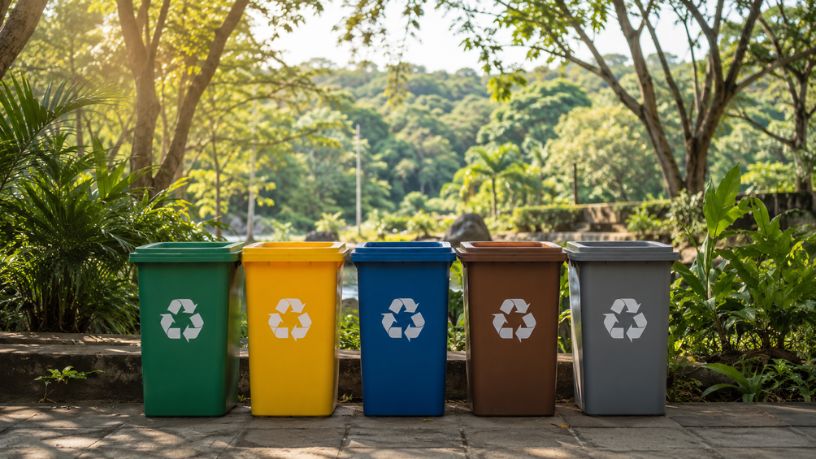
EBS – Empresa Brasileira de Saneamento highlights that sustainable waste management requires planning, operational control, and an environmental perspective from collection to final disposal. This model has become increasingly relevant because it transforms waste handling into a strategic part of urban infrastructure, reducing environmental risks and improving the quality of services provided to the population.
Rather than treating waste simply as discarded material, sustainable management considers origin, separation, transportation, treatment, reuse, and proper disposal. Interested in learning more about it? Keep reading to understand how collection, treatment, and environmental impact are connected throughout this process.
What makes sustainable management essential?
Sustainable management becomes essential because waste generates impacts that go far beyond the disposal point. According to EBS – Empresa Brasileira de Saneamento, when collection is irregular, organic, recyclable, industrial, or hazardous materials may follow inappropriate paths. As a result, the risks of soil pollution, drainage system obstruction, unpleasant odors, vector proliferation, and landfill overloading increase.
In addition, the lack of planning raises operational costs, as emphasized by EBS – Empresa Brasileira de Saneamento. Poorly designed routes, low source separation, and insufficient treatment increase logistics expenses and reduce the lifespan of final disposal structures. Therefore, sustainability in waste management depends on the integration of technical diagnostics, continuous operations, and environmental performance monitoring.
How does waste collection influence environmental outcomes?
Collection represents the first practical stage of sustainable management. When this process works efficiently, waste follows more organized and safer flows. This facilitates sorting, improves the recovery of recyclable materials, and reduces illegal dumping in public streets, vacant lots, streams, and protected areas.
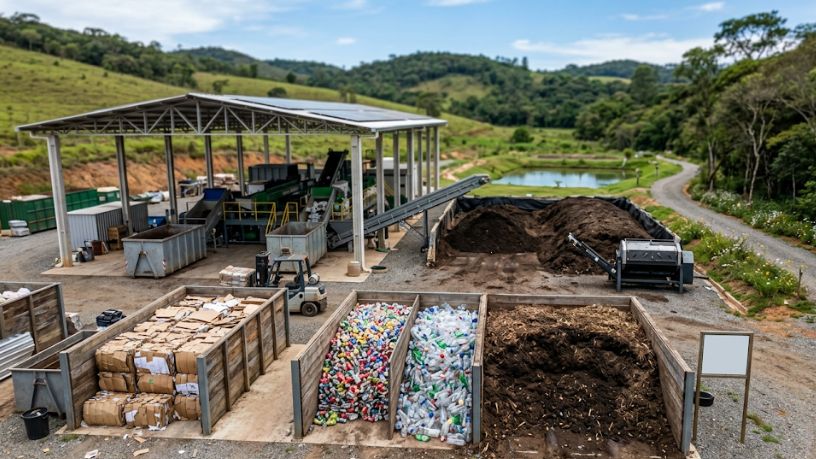
Another important aspect, according to EBS – Empresa Brasileira de Saneamento, lies in the frequency and coverage of the service. Municipalities, residential complexes, industries, and businesses must adapt collection systems to the generated volume, waste type, and local conditions. In this way, management stops being reactive and begins preventing problems before they become environmental or sanitary liabilities.
What benefits arise from waste treatment?
In summary, proper treatment increases the environmental value of sustainable management because it reduces the volume sent to final disposal and allows part of the materials to be recovered. This stage may involve sorting, composting, recycling, physical, chemical, or biological treatment, as well as specific solutions for waste with higher contamination potential. Among the main benefits are:
- Reduction of soil impacts: proper treatment prevents harmful substances from reaching the environment directly.
- Less pressure on landfills: separation and reuse extend the lifespan of disposal areas.
- Material recovery: recyclable and organic waste can return to productive chains or useful processes.
- Greater operational safety: defined flows reduce improvisation, losses, and handling risks.
- Better environmental control: indicators make it possible to monitor volumes, routes, disposal methods, and system performance.
These benefits show that treating waste is not merely about completing a technical stage. It also means reorganizing resources, reducing waste, and creating a more intelligent operation. Consequently, efficient treatment strengthens the connection between sanitation, sustainability, and environmental responsibility.
How does sustainable management reduce urban risks?
Sustainable management reduces urban risks because it prevents waste from accumulating in inappropriate places. In areas with sensitive drainage systems, for example, illegal disposal can block storm drains, galleries, and channels. As a consequence, cities become more vulnerable to flooding, erosion, and water contamination.
There are also direct effects on public health, as pointed out by EBS – Empresa Brasileira de Saneamento. Exposed waste attracts animals, insects, and microorganisms, while also compromising urban cleanliness. When collection and treatment follow technical criteria, the environment becomes safer, more organized, and more predictable. This predictability benefits both the population and the operators responsible for the system.
Sustainable management as a permanent commitment
In conclusion, sustainable waste management offers benefits that include more efficient collection, proper treatment, reduced environmental impacts, and improved urban quality. Its strength lies in the ability to connect stages that are often treated separately, even though they depend on one another to operate safely. In this way, properly managed waste ceases to be merely a disposal problem and becomes part of a more efficient sanitation policy.
Author: Diego Rodríguez Velázquez