




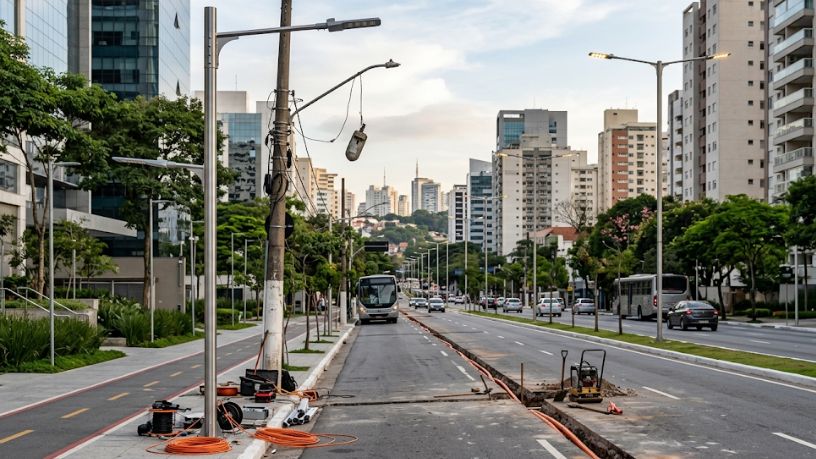
Matheus Vinicius Voigt, an expert in electrical engineering and infrastructure, believes that the modernization of public lighting is much more than a simple technical matter. It is a strategic investment that redefines urban quality of life, enhances public safety, and consolidates cities’ commitment to environmental sustainability.
Brazilian metropolises still operate lighting systems based on obsolete technologies, consuming financial and energy resources in a disproportionately high manner. To understand how public lighting management can become a tool for development, continue reading and discover the strategies already transforming urban centers across the country.
How does energy efficiency drive public lighting management?
The answer lies in a well-planned technological transition. According to Matheus Vinicius Voigt, replacing conventional luminaires with high-efficiency LED systems reduces energy consumption by up to 60%, a figure that translates into significant annual savings for municipal administrations. In addition to reducing operating expenses, modernization allows cities to reinvest these resources in other essential areas, such as health and education.
This transition should not be viewed merely as a cost-saving measure, but as an opportunity to create safer public spaces, with better-lit streets and an increased sense of security for pedestrians and drivers. The intelligent management of these systems, with motion sensors and automatic light intensity adjustment, further amplifies these gains.
What is the environmental and social impact of modernization?
The modernization of public lighting transcends the purely technical aspect. From Matheus Vinicius Voigt’s perspective, the reduction in energy consumption contributes directly to lower greenhouse gas emissions, aligning Brazilian cities with international sustainability commitments. The implementation of more efficient systems reduces dependence on traditional energy sources, favoring the use of renewable matrices and creating demand for technological innovation in the local market.
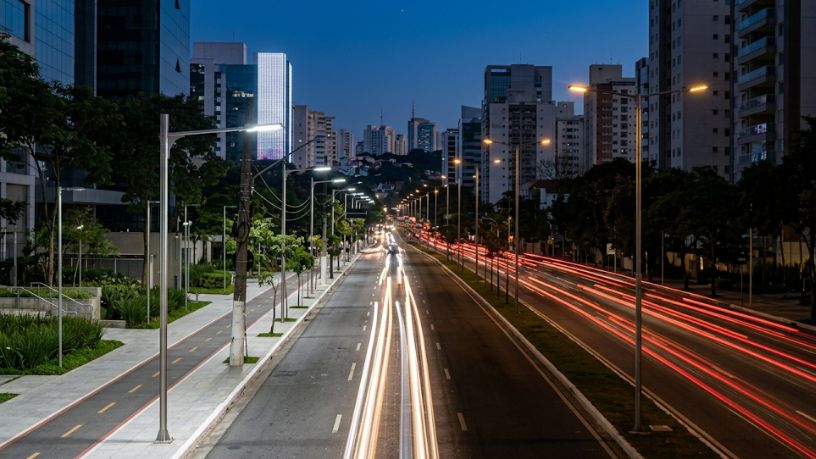
Socially, better-lit public spaces encourage people to spend more time on the streets, boost local nighttime commerce, and reinforce a sense of community. The project manager highlights that this transformation also generates jobs in the installation, maintenance, and monitoring of the new systems, consolidating economic opportunities for the local population.
What are the operational and financial challenges of this transition?
The path to modernization is not without obstacles. For Matheus Vinicius Voigt, the initial investment in infrastructure and technology represents a significant barrier for many Brazilian municipalities, especially those with lower fiscal capacity. However, the expert points out that innovative financing models, such as public-private partnerships and credit operations focused on energy efficiency, make projects that once seemed unfeasible now viable.
The lack of preventive maintenance and inadequate management of existing systems constitute another critical challenge. The formation of trained local technical teams is essential to ensure the longevity and proper performance of modernization investments. Training public servants in public lighting management and technological maintenance is an investment that multiplies the results of any efficiency project.
The future of cities relies on technological intelligence
From the perspective of Matheus Vinicius Voigt, a professional in the field of electrical engineering, the modernization of public lighting is not only a viable technical reality but an urgent necessity for sustainable urban development. In a scenario increasingly marked by the pursuit of energy efficiency, safety, and quality of life, the adoption of intelligent lighting solutions represents an important advancement for city management. Cities that embrace this transformation will be one step ahead in building spaces that are safer, more efficient, connected, and aligned with contemporary environmental and social demands.
In addition to reducing operational costs and optimizing public resources, the modernization of lighting infrastructure contributes to the appreciation of urban spaces and the well-being of the population. Investment in intelligent lighting infrastructure is, fundamentally, an investment in the present and in the legacy we will leave for future generations of Brazilians, promoting a more balanced, innovative, and sustainable development model.
Author: Diego Rodríguez Velázquez