


A joint operation involving Latin American, Caribbean, European and international authorities dismantled dozens of transnational criminal networks operating across 35 countries, according to information released by CARICOM and the European Union’s External Action Service. Known as ATLAS NEXUS, the action targeted five criminal markets: drug trafficking, human trafficking, firearms trafficking, document fraud and environmental crime.
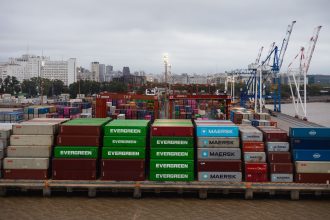
Authorities reported more than 490 arrests and the seizure of over 156.9 tons of drugs, 201 firearms, more than 3,100 units of ammunition and explosives, 169 properties and 464 pieces of jewelry. Investigators also identified other illicit assets and rescued and assisted 18 victims during the operation.
Operation connected criminal markets across regions
ATLAS NEXUS highlighted how organized crime groups rely on cross-border routes, logistics and financial structures that link the Western Hemisphere with Europe and other parts of the world. Rather than focusing on a single type of offense, the operation brought together investigations involving narcotics, weapons, trafficking in people, fraudulent documents and environmental crimes.
The operation was coordinated by the European Multidisciplinary Platform Against Criminal Threats, Frontex and the Caribbean Community’s Implementation Agency for Crime and Security, known as CARICOM IMPACS. The European Union’s EL PACCTO 2.0 program supported the effort, which also included AMERIPOL, Europol, Interpol, the Maritime Analysis and Operations Centre-Narcotics, or MAOC(N), and the Regional Security System.
The European External Action Service said operational actions took place on September 21, 2026. The agency published information about the results on September 22, while CARICOM announced the findings on September 23.
Results reported in Latin America and Europe
The operation produced results in several locations. In Ireland, authorities discovered a cocaine-processing laboratory, illustrating the role of European territory in networks connected to Latin American drug markets. In French Guiana, investigators identified illegal gold-mining sites linked to environmental crime.
Authorities in Costa Rica reported 375 arrests during related actions. In Paraguay, officials seized nearly 105 tons of cannabis. The results also included operations involving countries such as Brazil, Argentina, Chile, Ecuador, Guyana, Peru and Panama, as well as the Dominican Republic, Suriname, Trinidad and Tobago and other Caribbean nations.
The participation of the United States and multiple regional security bodies gave the operation a broad hemispheric dimension. The countries involved included states from South America, Central America and the Caribbean, alongside European partners and international law-enforcement organizations.
Regional cooperation as a security response
For CARICOM IMPACS, the operation demonstrated the importance of cooperation between agencies that do not always face the same criminal threats in the same way. Drug shipments, weapons, forged documents and illicit financial assets can move through overlapping routes, making coordination between national authorities essential to investigations.
The operation also reflects the growing role of regional institutions in addressing crimes that extend beyond national borders. CARICOM IMPACS provided a Caribbean security framework, while European and international agencies contributed investigative, operational and coordination capabilities. Together, the participating bodies pursued networks rather than isolated incidents.
Authorities did not provide, in the cited announcements, a detailed breakdown of every arrest, seizure or investigation by country. The available results nevertheless show the scale of the operation, with activity ranging from drug enforcement in Paraguay and Costa Rica to environmental investigations in French Guiana and the disruption of cocaine-processing activity in Ireland.
ATLAS NEXUS stands out as a major bi-regional law-enforcement effort connecting Latin America and the Caribbean with Europe. Its reported outcomes underscore the geographic reach of criminal networks and the need for information sharing, coordinated investigations and joint action across the Atlantic and throughout the Americas.