
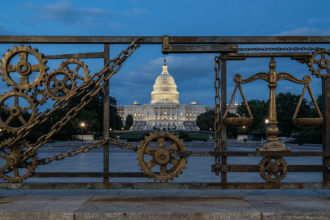

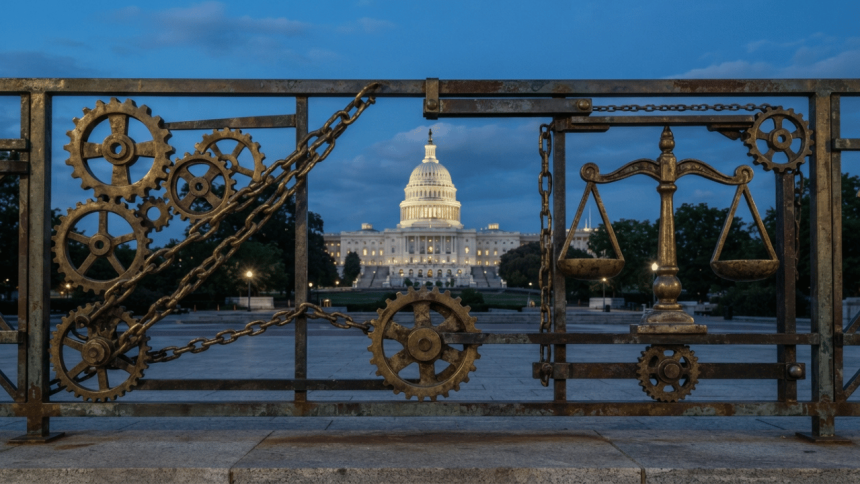
Bipartisan Senate negotiations are putting AI safety, business obligations and federal oversight back at the center of Washington’s policy debate.
Artificial intelligence regulation is moving back into the center of the U.S. political debate after lawmakers from both parties began discussing new federal requirements for advanced AI systems. Senate negotiators are considering legislation that could require AI developers to demonstrate that they are taking reasonable precautions against serious harms, while other proposals focus on national security and the potential misuse of AI. The discussions come as lawmakers face pressure to establish rules for a technology that is already changing workplaces, education, healthcare, financial services and consumer products. (Reuters)
The timing is significant because Congress has not yet established a comprehensive federal framework governing advanced AI. At the same time, the White House has emphasized rapid AI development and national competitiveness, while companies and researchers have increasingly debated how much oversight is appropriate. For Americans, the central question is no longer simply whether AI should be regulated. It is what federal rules could require from technology companies and how those decisions could affect jobs, businesses, consumers and innovation.
What AI rules are Congress considering right now?
One of the most significant proposals under discussion in the Senate would establish a requirement for AI companies to take reasonable precautions against major risks associated with their systems. According to Reuters, negotiators have been considering giving the Commerce secretary authority to request evidence that developers are taking those precautions, an approach described in the talks as a potential “duty of care.” The details remain under negotiation, meaning the proposal could change substantially before lawmakers decide whether to advance it. (Reuters)
The debate has expanded beyond one bill because lawmakers are confronting several different categories of AI risk. OpenAI said this week that it supports bipartisan congressional measures aimed at preventing AI from being misused in biological weapons and synthetic-virus development. Other lawmakers are examining broader questions involving advanced models, cybersecurity, consumer protection and the possibility that increasingly capable systems could create risks that existing laws were not designed to address. (Reuters)
There is also an important disagreement about where regulation should happen. Some policymakers have argued for national standards that would prevent a patchwork of state requirements, while others have pushed for stronger safeguards and greater authority for governments to respond to specific risks. Senate negotiators have reportedly discussed provisions that could limit states from enforcing certain AI laws involving model risks, illustrating how federalism has become part of the technology debate. (Reuters)
The administration’s existing policy direction adds another layer to the discussion. A June executive order instructed the federal government to promote advanced AI innovation and security while emphasizing reduced regulatory barriers and cooperation with the private sector. That approach places technological competitiveness and rapid adoption at the center of federal policy, while Congress is now debating whether additional statutory safeguards are necessary. (The White House)
How could federal AI regulation affect workers, consumers and businesses?
For consumers, the practical impact of future AI legislation could depend heavily on what lawmakers ultimately define as a high-risk system. Rules could influence how companies test advanced models, document potential dangers or respond when serious problems are identified. Consumers could encounter changes in AI-powered services ranging from financial tools and educational applications to healthcare technology and automated customer-service systems, although the exact requirements would depend on the legislation eventually enacted.
Workers have another major stake in the debate because AI adoption is expanding across the U.S. economy. Reuters reported on September 16 that 44% of U.S. workplaces were using AI as of May 2026, while labor productivity increased 2.2% in the second quarter. The same analysis noted that productivity gains from AI can take time to appear because companies must invest in implementation, employee training and other organizational changes. (Reuters)
For small businesses, regulation could create both costs and greater certainty. A company developing or deploying an AI system may have to document how it manages risks, conduct additional evaluations or comply with new federal reporting requirements if Congress adopts those measures. On the other hand, common federal standards could reduce the need for businesses operating across multiple states to understand substantially different rules in each jurisdiction.
The technology industry is therefore closely following the negotiations. Companies developing advanced AI systems face a particularly complicated policy environment because they must consider existing laws, state requirements, federal executive actions and potential congressional legislation at the same time. The eventual balance could influence investment decisions, compliance costs, product launches and where companies choose to conduct research and development.
What happens next with AI legislation in Washington?
The immediate challenge for Congress is timing. Lawmakers are approaching the 2026 midterm election period, leaving a limited window for major legislation before attention shifts toward campaigning. Reuters reported that Senate negotiations were still active, while other reporting indicated that the House was preparing for an extended recess without having passed major AI legislation. (Reuters)
That does not mean the issue will disappear. AI development is continuing regardless of congressional schedules, and recent warnings from researchers have increased pressure on lawmakers to address questions about safety and accountability. OpenAI’s support for legislation concerning biological threats is one example of how specific risks could provide a narrower starting point for congressional action even if lawmakers cannot agree on a comprehensive AI law. (Reuters)
The policy debate also involves a fundamental economic question: how can the United States establish safeguards without slowing technological development enough to weaken its position in global competition? The White House has explicitly linked AI innovation to national security, investment and American technological leadership. At the same time, lawmakers considering stronger oversight argue that certain risks may require enforceable standards rather than relying entirely on voluntary industry commitments. (The White House)
For Americans, the next important developments will come from the Senate negotiations, any new bipartisan proposals and decisions about which provisions could attract enough support to move through Congress. The final outcome remains uncertain, but the debate is becoming increasingly relevant to everyday economic life. Whether someone works with AI, runs a small business, studies, uses automated services or simply buys products from companies deploying the technology, federal decisions made in the coming months could shape how quickly AI expands and what responsibilities accompany that expansion.
Sources:
- Reuters: U.S. Senate negotiators consider requiring AI firms to mitigate known major risks
- Reuters: OpenAI backs U.S. congressional bills on AI and biological weapon threats
- White House: Executive Order on Advanced Artificial Intelligence Innovation and Security
- White House: Fact Sheet on Advanced AI Innovation and Security