



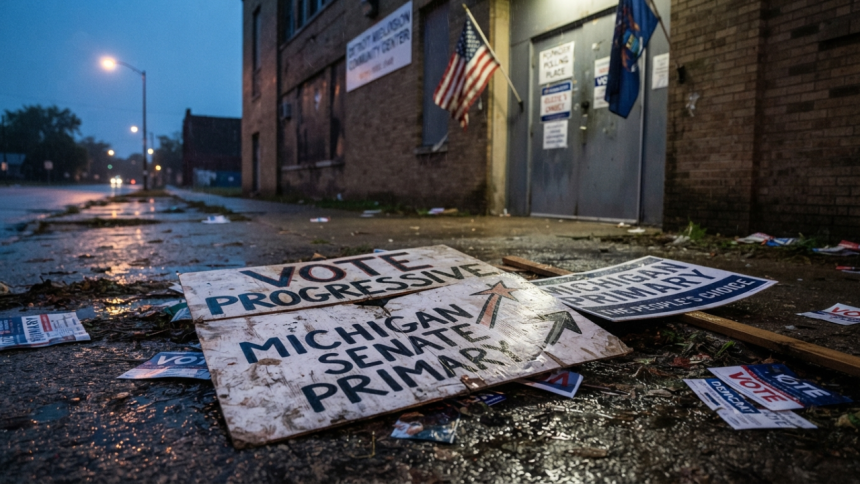
Michigan Democrats delivered one of the defining results of the 2026 primary season last week, choosing progressive former public health official Abdul El-Sayed over establishment favorite Rep. Haley
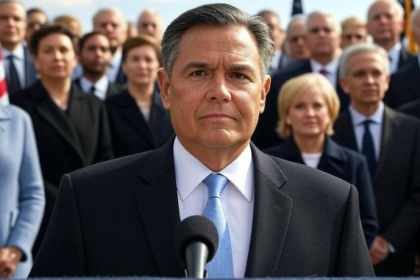
Stevens in a race that will help determine whether Democrats can retake the Senate. El-Sayed, an epidemiologist who has never held elected office, defeated the four-term congresswoman by a single percentage point after all ballots were counted, a margin so narrow that the race wasn’t officially called until the morning after Election Day.
A Race Democrats Cannot Afford to Lose
The stakes attached to this contest go well beyond Michigan’s borders. The seat being vacated by retiring Democratic Sen. Gary Peters is widely viewed as a must-win for Democrats, who need a net gain of four seats nationally to flip control of the Senate. El-Sayed now advances to face former Rep. Mike Rogers, who won the Republican nomination unopposed, in what both parties expect to be one of the most closely watched general election matchups of the cycle.
What made El-Sayed’s victory especially notable was the financial mismatch behind it. He overcame roughly $65 million in outside spending marshaled against him, with groups backing Stevens outspending his campaign on the airwaves by several multiples, according to ad-tracking firm AdImpact. Governor Gretchen Whitmer’s late endorsement of Stevens, seen at the time as a last-ditch effort by the party establishment to halt El-Sayed’s momentum, ultimately wasn’t enough to change the outcome.
The Progressive Playbook
El-Sayed’s campaign leaned heavily on national progressive star power, with Vermont Sen. Bernie Sanders and New York Rep. Alexandria Ocasio-Cortez both campaigning alongside him in the state, including a joint appearance in Detroit in July. His platform centered on Medicare for All, a rejection of corporate campaign donations, and sharp criticism of Stevens for her past support of aid to Israel. He also staked out an aggressive position on artificial intelligence, calling for public ownership and strict regulation of AI companies along with new accountability requirements for data center projects tied to utility usage and environmental standards.
Stevens, who flipped a suburban House seat in 2018 and previously served on the Obama administration team tasked with rescuing the auto industry during the 2008-2009 recession, ran on the argument that her more moderate profile gave Democrats the best chance of winning a genuinely competitive general election in a state Trump has contested fiercely. Her campaign focused on manufacturing jobs and pledged to fight the president on tariffs and rising costs tied to the ongoing conflict with Iran, betting that swing voters would reward pragmatism over ideology.
In an unusual twist, national Republicans made little secret of preferring to face El-Sayed rather than Stevens in November. The National Republican Senatorial Committee produced a digital ad highlighting El-Sayed’s progressive credentials and his endorsement from Sanders, a move widely interpreted as an attempt to boost his standing in the primary. President Trump told Fox News before the vote that he believed Rogers would “do much better against Abdul than he’s going to do against the congresswoman,” a comment Democrats close to Stevens’ campaign pointed to as evidence the GOP saw her as the tougher opponent.
A Divisive Primary, a Push for Unity
In his victory speech, El-Sayed sought to project unity after months of sharp exchanges with Stevens over foreign policy and AI regulation, telling supporters that Democrats “cannot wait to come together and win in November.” He praised Stevens as a committed public servant and argued there was more uniting the party’s factions than dividing them. Stevens, for her part, congratulated El-Sayed publicly and said she was proud to offer her support, while national Democratic leadership quickly coalesced behind the nominee after having quietly signaled support for Stevens during the campaign itself.
El-Sayed wasn’t the only insurgent to win in Michigan that night. State Rep. Donavan McKinney, a democratic socialist, defeated incumbent Rep. Shri Thanedar in the Democratic primary for the state’s 13th Congressional District, adding to a string of recent upsets by candidates further left on the political spectrum in states including New York and Colorado. Together, the results suggest the primary electorate in several blue and purple states is rewarding candidates willing to run explicitly against both parties’ establishments.
What Comes Next
With redistricting fights already reshaping congressional maps in roughly ten states ahead of November, and Republicans holding only a narrow House majority, the Michigan Senate race is likely to draw enormous spending and national attention through the fall. Whether El-Sayed’s coalition of labor support, progressive enthusiasm, and anti-establishment messaging can translate into a general election win against Rogers in a state Trump has targeted will be one of the clearest early tests of whether the Democratic Party’s leftward energy can actually flip seats, rather than simply win primaries.