




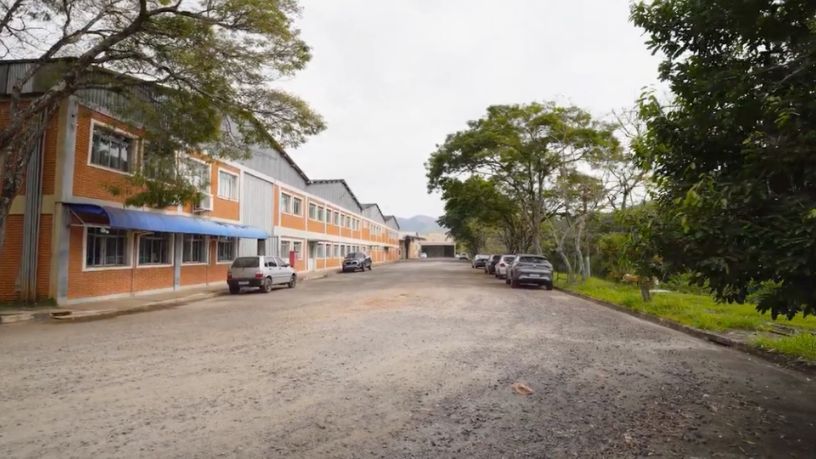
Some legal cases become known because of the amount of money involved. Others attract attention due to the relevance of the parties or the complexity of the legal issues under discussion. The case involving the industrial complex located in Cambuí combines a bit of all these elements, but one aspect has come to stand out above the rest: the long gap between the judicial auction and the effective transfer of the property to the company that purchased it.
Família Shih won the auction held in September 2024 with the objective of establishing a Health Economic-Industrial Complex (CEIS) at the site. Since then, the validity of the acquisition has been recognized at different stages of the proceedings and was recently reaffirmed by Brazil’s Superior Court of Justice (STJ), which rejected the appeal filed by WiseCase.
Even so, anyone following the case can see that the dispute is not yet over. This is because the company’s main expected outcome—taking possession of the property and beginning the implementation of its project—still depends on the effective transfer of possession.
More than just a sequence of judicial rulings, the case has come to illustrate how certain disputes can continue generating tangible consequences even after significant legal decisions have already been made.
The Case Expanded Throughout the Proceedings
After the auction was concluded, the expectation was that the next step would be the transfer of the property. However, new developments altered that course.
Filmax Plásticos Ltda., the company that continues to occupy part of the industrial complex, took actions that resulted in the Municipality of Cambuí joining the case as amicus curiae. From that point forward, additional filings and arguments became part of the proceedings, broadening a dispute that had initially been focused on the enforcement of possession.
At the same time, appeals continued to be reviewed by different courts. The most recent one was analyzed by the Superior Court of Justice, which upheld the validity of the auction and dismissed the arguments seeking its annulment.
Individually, each of these developments represents just another procedural step. Taken together, however, they help explain why the company has still been unable to make use of a property it acquired nearly two years ago.
Judicial Proceedings and Investment Timelines Do Not Always Move Together
There is one aspect that rarely appears in court decisions but directly affects cases like this: the time required to turn an acquisition into an effective investment.
No enterprise begins solely because a favorable ruling has been issued. Access to the property, executive planning, structural adaptations, team recruitment, and a range of other measures can only begin once possession is effectively transferred.
In the case of the Cambuí industrial complex, this stage has remained on hold throughout the proceedings. According to information presented by Família Shih, even after the expiration of the deadline originally associated with the eviction order, Filmax obtained an additional 90 days to remain on the property, once again extending the wait for the transfer of possession.
Regardless of future developments, one conclusion already appears evident: the dispute involving the Cambuí industrial complex has evolved beyond a debate over a judicial auction. It has become a case in which the central expectation is no longer the issuance of new rulings, but the effective enforcement of those that have already been rendered.