



As presented by Kelsem Ricardo Rios Lima, GDP and development are often treated as synonyms in public debates, but this equivalence hides decisive nuances for understanding a society’s well-being. Focusing only on the growth of Gross Domestic Product is like evaluating a race by looking only at the speedometer, ignoring the condition of the engine, the safety of the track, and the skill of the driver.
Numbers may dominate headlines, but on their own they do not reveal whether people live with dignity, social protection, and real opportunities for progress. Learn more about this topic in the following reading:
GDP and Development: the limits of a purely economic indicator
GDP measures the total value of goods and services produced over a given period, making it useful for comparing economies and planning fiscal and monetary policies. However, according to Kelsem Ricardo Rios Lima, this indicator does not show who benefits from that growth, nor does it reveal whether the expansion is based on solid foundations or on cycles of debt and natural-resource exploitation. As a result, a country can have rising GDP while still suffering from deteriorating public services and low levels of education.
Moreover, GDP does not distinguish between activities that improve quality of life and those that merely fix problems. Spending on accidents, illness, and violence counts as economic output, even though it results from serious failures in preventive policies. In debates about GDP and development, it is essential to recognize that higher emergency health spending, for example, can inflate statistics without representing real progress in living conditions.
Quality of life, inclusion, and sustainability
According to Kelsem Ricardo Rios Lima, true development means ensuring that the wealth produced is translated into concrete opportunities for the population. This includes access to quality education, efficient healthcare, decent public transportation, adequate housing, and legal certainty in personal and business relations. When these elements advance alongside economic growth, a country becomes more resilient, productive, and capable of withstanding crises.
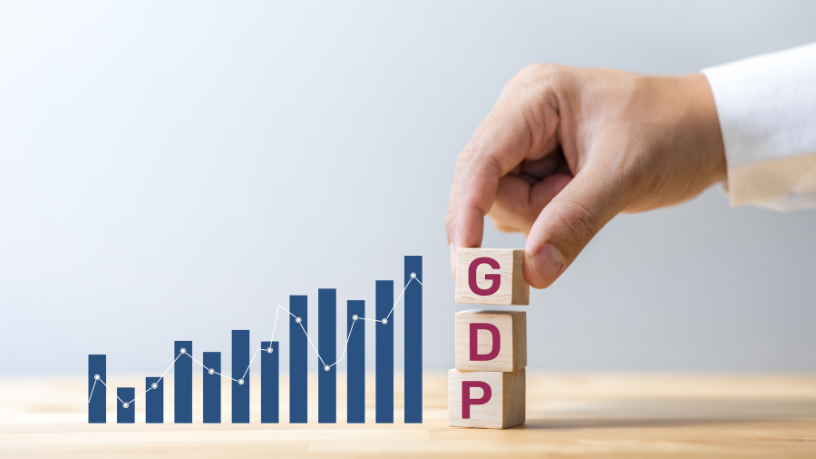
Another central point is social inclusion. An economy may grow driven by a few highly concentrated sectors, leaving a large share of the population on the margins, in informal jobs or extremely low-paying activities. In this scenario, GDP and development move in opposite directions. Sustainable development requires policies to reduce inequality, encourage productive entrepreneurship, formalize businesses, and strengthen the social safety net.
Strong institutions, innovation, and long-term planning
As Kelsem Ricardo Rios Lima also points out, there is no solid development without reliable, predictable institutions aligned with the public interest. This includes legal certainty, trustworthy registry systems, respect for contracts, administrative transparency, and an effective fight against corruption. Stable institutional environments create confidence, attract investment, and reduce transaction costs for businesses and citizens, allowing economic growth to be accompanied by greater efficiency.
Beyond institutions, long-term planning is a key element in the relationship between GDP and development. Countries that invest in science, technology, infrastructure, and human capital reap consistent rewards over time, even in adverse global scenarios. Innovation, high-quality technical and higher education, support for small and medium-sized enterprises, and incentives for the green economy are pillars that turn short-term growth into a broad, environmentally responsible development path.
In short, when GDP and development are analyzed more deeply, it becomes clear that positive numbers alone are not enough to define a nation’s success. For Kelsem Ricardo Rios Lima, growing without reducing inequality, strengthening public services, and protecting the environment is to build an unstable future, vulnerable to economic, political, and social crises. The real challenge is to transform the wealth produced into tangible quality of life in people’s daily lives and into more organized, livable cities.
Author: Clodayre Daine