

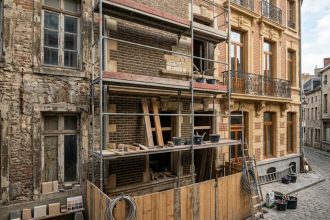



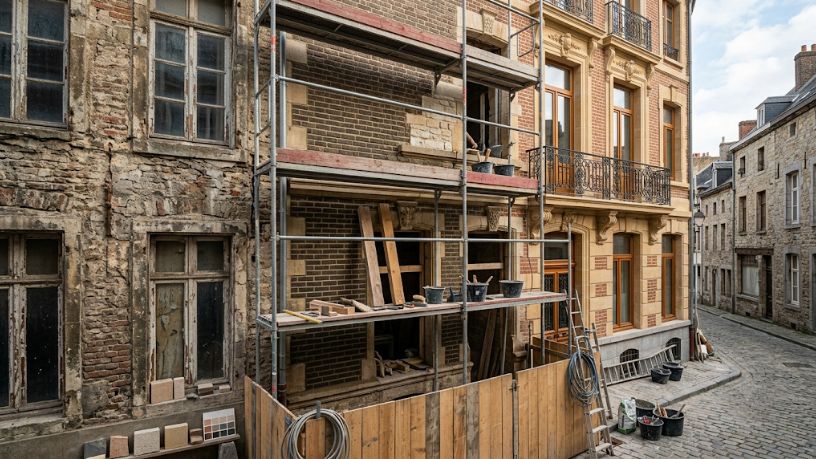
Daugliesi Giacomasi Souza, founder of DGdecor, often hears the same question from people looking at an old facade: should everything be torn down and rebuilt from scratch, or should the entire structure be preserved out of respect for the property’s history? This seemingly simple choice overlooks a third option that rarely enters renovation discussions but can dramatically affect the project’s cost, timeline, and final outcome.
The answer lies neither in the building’s age nor in the outward appearance of its walls, but in the condition of the structure supporting the entire facade. Understanding that structure has a greater impact on the final result than any aesthetic decision made later, yet it is precisely the aspect that many renovation projects tend to overlook.
What Really Determines Whether an Old Facade Should Be Demolished or Preserved?
The building’s structural condition carries far more weight than its external appearance when deciding the direction of a renovation. A facade with deep cracks or persistent moisture damage at its base may conceal structural issues that no fresh coat of paint can solve. On the other hand, a weathered-looking facade with an intact structure often responds well to targeted, localized repairs. Distinguishing between these situations requires a technical inspection report prepared by a licensed professional—not a visual assessment made from the sidewalk.
After reviewing structural assessments across various renovation projects, Daugliesi Giacomasi Souza notes that surface-level damage is often caused by problems elsewhere in the building, such as a roof leak that allows water to travel down interior walls until it reaches the facade. Repairing only the facade in these situations merely conceals the problem temporarily, allowing the damage to reappear a few months later and making a second renovation even more expensive than the first.
How Does the Original Structure Influence the Outcome of a Facade Renovation?
Buildings constructed decades ago often follow construction methods that are no longer common today, such as solid masonry walls without internal steel reinforcement or foundations that are shallower than current building standards require. That does not automatically make them structurally weak, but it does mean that any facade renovation must respect the limitations of the original construction system. Adding heavy cladding to a wall designed to support a lighter load, for example, may compromise the structure within a few years, even if no visible signs appear immediately.
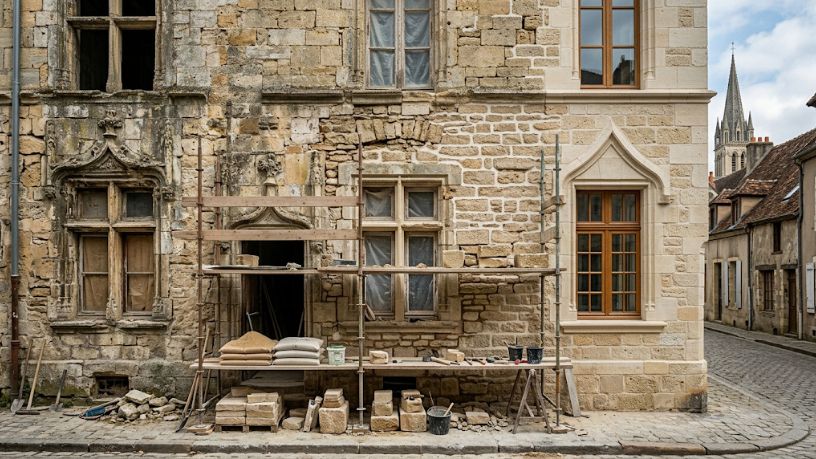
According to Daugliesi Giacomasi Souza, this structural assessment phase is frequently overlooked because it does not contribute to the project’s visual appearance, even though it is what ensures the facade remains stable and free of premature cracking long after the renovation is complete. Before selecting finishes, colors, or textures, the project must first determine what the existing structure can safely support.
When Are Minor Improvements More Valuable Than a Complete Renovation?
Not every old facade requires structural intervention to achieve a renewed appearance and improved functionality. Replacing windows and doors with more efficient models, repainting with products specifically suited to the wall material, and restoring original architectural details such as moldings, railings, or trim can significantly transform the property’s appearance without altering the structure that supports the building. These improvements typically cost only a fraction of a full-scale renovation while preserving architectural features that cannot be recovered once they have been removed.
Does renovating always require demolishing part of the original facade? Not at all. When the structure remains sound, improvements may be limited to the surface, preserving original elements while reducing construction costs without compromising safety or the building’s thermal performance. As Daugliesi Giacomasi Souza, founder of DGdecor, observes when reviewing projects in which homeowners had already budgeted for a complete renovation before receiving the structural assessment, understanding this distinction helps prevent unnecessary spending on work that could have been limited to surface finishes.
Renovating a Facade Means Deciding What Story a Home Will Tell
Every old facade reflects decisions made in another era: the proportions of its windows, the design of its entrance, and the materials that have withstood the passage of time while preserving their essential character. Renovating is not about erasing that history—it is about carefully choosing which features remain visible to people passing by and which improvements become part of the building’s internal structure, unseen once the work is complete.
In Daugliesi Giacomasi Souza’s view, that decision says more about the people who live in the home than about the building itself. A thoughtfully renovated facade carries both the past and the present at the same time, without requiring one to erase the other. That is what distinguishes a well-executed renovation from a simple cosmetic makeover.