





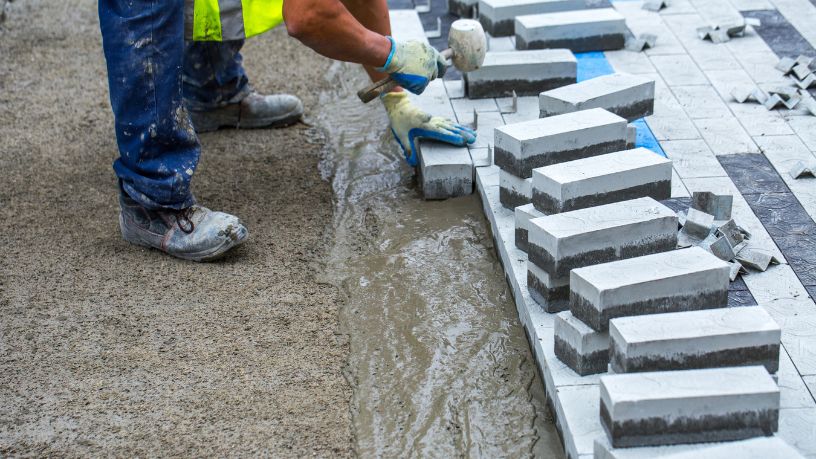
According to engineer Valderci Malagosini Machado, interlocking pavers in public areas have been gaining ground in urban projects that aim to combine structural strength, safe mobility, and enhancement of shared spaces. Far beyond aesthetics, this type of paving represents a technical solution with direct impacts on roadway durability, pedestrian accessibility, and overall urban quality of life.
In this article, we will analyze why interlocking pavers are increasingly adopted in sidewalks, plazas, and circulation routes, the economic and social benefits they offer, and how proper application can sustainably transform the urban experience.
What Makes Interlocking Pavers a Durable Solution for Public Areas?
The main characteristic of interlocking pavers is their interlocking system, which distributes loads efficiently and reduces structural cracking, as explained by engineer Valderci Malagosini Machado. Unlike rigid, continuous pavements, this model allows slight movement between units, absorbing stress without compromising the integrity of the system.
In addition, maintenance is simpler and more cost-effective. If underground utility repairs are needed, the units can be removed and reinstalled without widespread demolition. This flexibility increases the service life of the paved area and reduces long-term maintenance costs.
How Do Interlocking Pavers Contribute to Urban Accessibility?
Accessibility is one of the pillars of contemporary urban planning. When properly specified and installed, interlocking pavers provide a regular, slip-resistant, and safe surface for pedestrians, including individuals with reduced mobility.
According to engineer Valderci Malagosini Machado, tactile paving can be integrated into the system to ensure proper guidance for individuals with visual impairments. Standardized installation and strict level control are essential to prevent uneven surfaces that could hinder circulation. In this way, interlocking pavers move beyond being merely a structural solution and become a tool for urban inclusion.
What Technical Criteria Should Be Considered in Their Application?
The performance of interlocking pavers depends on proper design and execution. Selecting the material alone is not enough; it is necessary to consider the base, subbase, and drainage system of the area.
Among the main technical criteria are:
Proper sizing of the base and bedding layer;
Selection of appropriate compressive strength according to traffic type;
Strict control of leveling and compaction;
Efficient surface drainage planning;
Use of certified units with consistent standards and quality.
These factors ensure structural performance and prevent premature deterioration that could compromise pavement durability.
Do Interlocking Pavers Impact Urban Drainage?
As highlighted by engineer Valderci Malagosini Machado, these pavers significantly impact urban drainage, especially when used in permeable systems. Certain models allow greater soil permeability, contributing to stormwater absorption and reducing surface runoff.
In highly impervious urban areas, this feature becomes strategic. Improved drainage reduces pressure on stormwater systems and helps prevent flooding. Thus, interlocking pavers can be integrated into sustainable infrastructure solutions within the urban environment.
How Does This Solution Influence Urban Quality of Life?
In the analysis of engineer Valderci Malagosini Machado, quality of life in cities is directly related to the organization of public spaces. Well-built sidewalks, accessible plazas, and safe roadways encourage pedestrian circulation, social interaction, and outdoor activities.
Moreover, simplified maintenance prevents scenarios of visual and structural deterioration. Well-maintained spaces convey a sense of care and safety, factors that directly influence how residents perceive the urban environment.
Are Interlocking Pavers a Trend or a Necessity in Cities?
With growing demands for accessibility, sustainability, and economic efficiency, interlocking pavers are no longer just an aesthetic trend but a strategic solution for urban planning.
Their proper application contributes to more resilient, organized, and inclusive cities. By combining structural durability, ease of maintenance, and improved mobility, this solution demonstrates that urban infrastructure can be designed in both a technically sound and human-centered manner.
Author: Diego Rodríguez Velázquez