






According to Elmar Juan Passos Varjão Bomfim, CEO of André Guimarães Engenharia e Infraestrutura, special projects represent one of the most sophisticated segments of modern engineering, requiring a high level of technical precision, multidisciplinary coordination, and integrated management of construction processes.
This article analyzes how engineering operates in environments with elevated technical demands, focusing on special projects and advanced structural systems.
What defines special projects in contemporary engineering?
Special projects are distinguished by the technical complexity involved, the level of operational risk, and the need for unconventional engineering solutions. They generally require in-depth soil studies, differentiated structural systems, and integration among multiple technical disciplines.
Elmar Juan Passos Varjão Bomfim works within a context in which this type of project demands highly precise decision-making, since even small variations can directly impact stability and execution efficiency. In complex infrastructure environments, his work at André Guimarães Engenharia e Infraestrutura, a company within the André Guimarães Group, reinforces the importance of technical adaptability in the face of demanding and constantly changing scenarios.
This type of project is defined not only by its size, but also by the depth of the technical challenges involved in its design and execution.
Which factors shape the execution of special projects in practice?
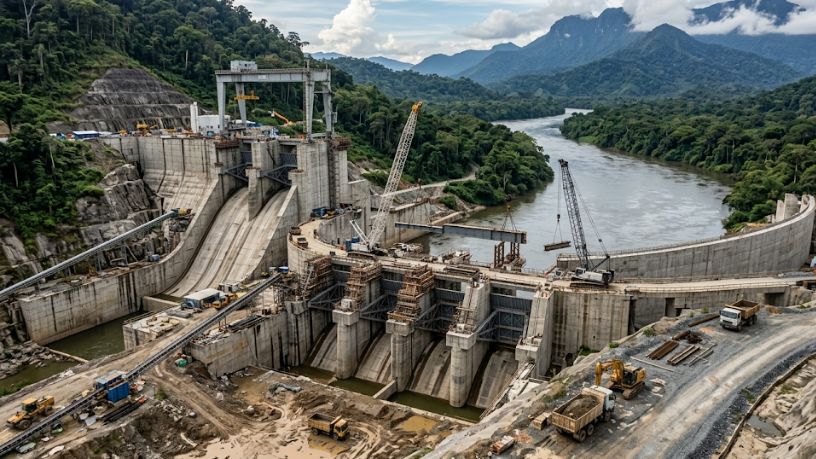
The execution of special projects requires a combination of technical and operational factors occurring simultaneously, since any misalignment may compromise the overall performance of the project. In highly complex environments, this level of organization determines the efficiency of the engineering applied.
Elmar Juan Passos Varjão Bomfim explains that the execution of large-scale structures depends on coordination among different technical fronts, requiring precision and continuous alignment throughout every stage of the project. His experience in complex infrastructure environments reinforces the importance of integrating planning, control, and execution as the foundation for consistent results.
These factors materialize into essential elements of engineering practice:
- Multidisciplinary coordination: integration among areas such as structural engineering, geotechnics, and logistics, ensuring technical consistency throughout all stages of the project
- Operational risk control: early identification of critical variables that may impact project costs, deadlines, and construction safety
- Field execution management: continuous monitoring of construction fronts to ensure compliance with the executive project
- Constant technical monitoring: use of data and analysis to correct deviations and adjust decisions throughout the project’s progression
- When applied in an integrated manner, these elements increase predictability and reduce structural and operational failures throughout execution.
Engineering perspectives in highly complex environments
The advancement of engineering applied to special projects points toward increasing sophistication in construction methods and management models. Projects of this nature require not only technical precision, but also the ability to continuously adapt to dynamic and changing conditions throughout execution.
Within this context, Elmar Juan Passos Varjão Bomfim is connected to this evolving scenario, in which engineering assumes an increasingly strategic role in enabling complex, large-scale infrastructure developments. This movement reinforces the need for organizations prepared to operate under elevated technical and operational demands.
The trend is for the sector to move toward even more integrated structures, with greater dependence on data, technical coordination, and systemic efficiency.
Applied engineering and the maturity of special projects
Special projects represent an advanced stage of contemporary engineering, in which multidisciplinary integration, rigorous technical control, and adaptability are no longer differentiators, but essential requirements. These elements define the quality and reliability of high-complexity projects.
Elmar Juan Passos Varjão Bomfim is part of this environment focused on the management of major infrastructure developments, where engineering and operations management work in coordination to sustain consistent results. His role at André Guimarães Engenharia e Infraestrutura, a company within the André Guimarães Group, reinforces the importance of structured and technically mature organizational models.
Technical consolidation of special projects in Brazil
The development of special projects in Brazil is directly linked to the evolution of engineering methods and the growing demand for operational efficiency. This movement is redefining execution standards and increasing the need for increasingly sophisticated solutions.
In this scenario, Elmar Juan Passos Varjão Bomfim is associated with a trajectory connected to the management of complex infrastructure projects, reinforcing the relevance of engineering as a central element in the transformation of the sector. The maturity of the segment depends on the consolidation of integrated practices capable of combining technical precision, efficient management, and innovation applied to the execution of structural projects.
Author: Diego Rodríguez Velázquez