





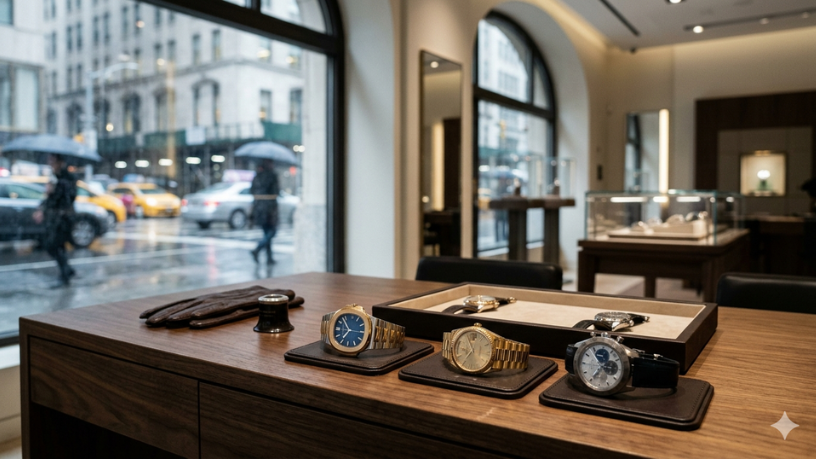
The global luxury watch market is going through a period of sharp contrasts in 2026. While geopolitical conflicts and economic instability continue to impact key consumer regions, the United States remains one of the main drivers sustaining growth for major luxury brands. The current landscape highlights how high-end consumer behavior has evolved in recent years and how traditional watchmakers are being forced to adapt to a more unstable, selective, and competitive world.
Recent financial results from Swiss luxury group Richemont, owner of some of the most prestigious watch brands in the world, reinforce this transformation. Strong performance in the American market helped offset losses recorded in regions affected by political tensions and armed conflicts, particularly in the Middle East. More than a corporate earnings story, the numbers reveal important trends involving luxury consumption, economic confidence, and the growing role of the U.S. as a central force in the premium industry.
The resilience of the American market is not happening by accident. Even with high interest rates and global economic uncertainty, wealthy U.S. consumers continue to show strong willingness to spend on products viewed as exclusive, durable, and culturally valuable. Luxury watches are no longer seen only as status symbols. Increasingly, they are treated as collectible assets, long-term investments, and personal statements of identity.
This shift in consumer perception has strengthened traditional watchmakers during a time when impulsive spending has given way to more intentional purchasing decisions. Today’s luxury buyer researches more carefully, compares options more critically, and looks for products that carry heritage, craftsmanship, and long-term value. That helps explain why Swiss watch manufacturers continue attracting buyers despite a less predictable economic environment.
At the same time, the effects of war in the Middle East demonstrate how vulnerable the luxury sector remains to external disruptions. Regions that once generated strong sales are now experiencing slower tourism activity, commercial uncertainty, and reduced international consumer traffic. Luxury retail depends heavily on global mobility, especially in major shopping destinations and international airports. When geopolitical crises interrupt that flow, financial impacts appear quickly.
Another major factor shaping the industry is digital transformation. For decades, luxury watch brands resisted e-commerce and maintained an almost exclusive focus on physical boutiques. That reality has changed significantly. High-end consumers now research products online, follow launches through social media, and make purchasing decisions influenced by digital content and specialized creators.
Brands that adapted to this new behavior have managed to expand their reach and strengthen connections with younger audiences. Modern luxury no longer depends only on physical exclusivity but also on the ability to create desire and engagement in digital environments. Watch influencers, online communities, and international content platforms have completely reshaped how prestige brands communicate with consumers.
A generational shift is also redefining the premium watch market. Millennials and Generation Z consumers are becoming increasingly important buyers in the luxury segment. Unlike previous generations, these consumers value authenticity, purpose, and brand experience as much as tradition itself. Companies that fail to recognize this change risk aging alongside their historical customer base.
Another reason behind the strength of the U.S. market is the resilience of domestic American consumption. Even as some sectors slow down, the American economy still demonstrates a level of purchasing power that many global markets struggle to match. For luxury groups, the U.S. increasingly represents a safe haven amid broader international instability.
The situation also highlights an important characteristic of the luxury industry. During periods of global uncertainty, high-income consumers tend to maintain their purchasing habits more consistently than middle-income buyers. As a result, luxury companies are often able to preserve momentum even when broader economic conditions weaken.
Still, the future of luxury watchmaking comes with clear challenges. Competition has intensified, the secondary resale market continues growing, and consumers have become far more selective. Brand prestige alone no longer guarantees automatic demand the way it once did. Companies must now balance heritage and innovation without losing their identity.
Sustainability is becoming another critical issue. Modern luxury consumers increasingly pay attention to environmental responsibility, sourcing practices, and corporate ethics. In today’s market, exclusivity alone is no longer enough. Buyers also expect transparency and social responsibility from premium brands.
Recent results suggest that the luxury watch industry remains strong, but it is clearly entering a new phase of adaptation. Continued growth in the United States provides stability for major international groups, yet geopolitical pressures reveal that no brand is fully protected from global disruption.
Ultimately, the premium watch sector appears to be evolving into something more complex than traditional luxury. Less dependent on pure status and more connected to personal identity, cultural value, and long-term ownership, the industry is redefining what exclusivity truly means in a rapidly changing world.