


As pressure on water resources continues to grow across several agricultural regions in Brazil, the efficient use of water for irrigation has become a determining factor for both productivity and the long-term sustainability of rural properties, requiring farmers to adopt technologies and management practices that maximize the value of every drop used throughout the production cycle. Wander Aguilera Almeida, an agribusiness entrepreneur who closely follows this reality through agricultural business brokerage, points out that water efficiency is no longer just an environmental concern but also a matter of direct commercial competitiveness, capable of significantly influencing the financial results achieved at the end of each harvest.
Why has efficient water management become a priority in agriculture?
Regions that historically relied almost exclusively on regular rainfall to sustain agricultural production have experienced, in recent years, climate variations that have made the natural availability of water less predictable throughout the growing season. As a result, producers have increasingly invested in supplemental irrigation systems to ensure consistent productivity even during years of irregular rainfall. Wander Aguilera Almeida notes that this growing need for supplemental irrigation has led producers to completely rethink their relationship with water, treating it as a strategic input that must be managed with the same level of discipline applied to fertilizers and crop protection products.
This shift in perspective also reflects increasing pressure from international buyers, who now consider responsible water use as part of the sustainability standards evaluated at the origin of imported agricultural products. This reinforces the commercial—not just environmental—importance of efficient water management on farms. Producers who overlook this aspect may, over time, face greater difficulty accessing markets with stricter environmental requirements.
Which technologies help reduce water waste in irrigation?
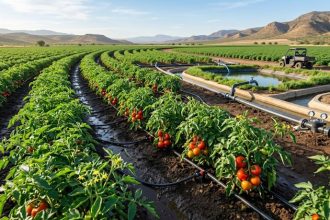
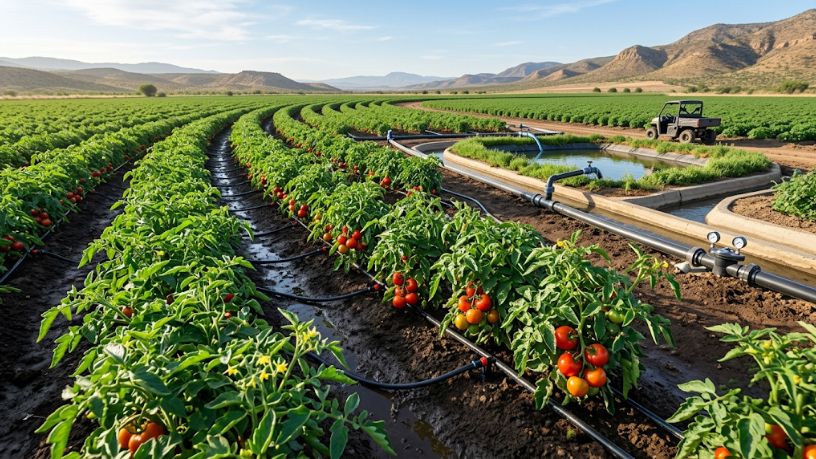
Drip irrigation systems and center pivots equipped with soil moisture sensors allow water to be applied in precisely the amount required for each stage of crop development, significantly reducing waste compared to traditional irrigation methods that apply uniform volumes regardless of the plant’s actual needs at a given moment. Wander Aguilera Almeida explains that this precision, enabled by sensors and automated systems, has helped reduce operating costs while improving productivity in efficiently irrigated fields.
Agricultural management software that integrates climate data, soil characteristics, and the specific water requirements of each crop also enables producers to more accurately determine the ideal timing and irrigation volume, preventing both water waste and the water stress that could compromise expected crop yields. These tools often incorporate short-term weather forecasts, allowing irrigation schedules to be automatically adjusted based on expected rainfall in the coming days.
How does water efficiency influence farm production costs?
Reducing water waste in irrigation has a direct impact on production costs because more efficient systems consume less electricity for pumping and reduce the need to develop additional water sources, resulting in significant savings over multiple production cycles. Wander Aguilera Almeida emphasizes that these cost savings, combined with the productivity gains provided by more precise irrigation, often justify the initial investment in advanced water management technologies, despite the substantial upfront expense required for implementation.
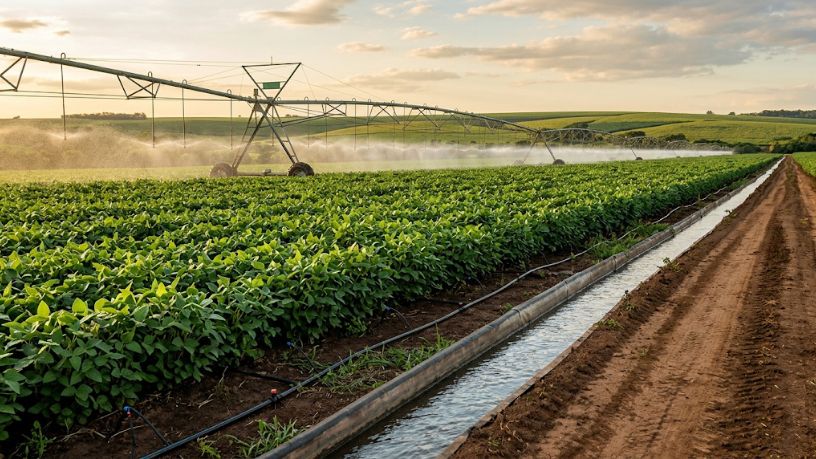
Farms that invest in water efficiency also tend to be more resilient during years of severe drought, as better resource management allows them to maintain satisfactory productivity even under less favorable weather conditions than those historically experienced in their region. This additional resilience generally translates into lower financial volatility from one harvest to another, since relying exclusively on natural rainfall tends to produce greater fluctuations in annual productivity.
What is the relationship between water permits and farm production planning?
In Brazil, using water resources for agricultural irrigation generally requires a water-use permit issued by environmental agencies responsible for managing river basins, a process that demands advance planning from producers intending to expand irrigated acreage or implement new water collection systems. In this context, producers who fail to incorporate the permitting process into their planning may experience significant delays in irrigation projects, disrupting production expansion schedules previously established with suppliers and financial institutions involved in the investment.
Wander Aguilera Almeida highlights that this regulatory requirement also reinforces the importance of continuously monitoring water availability within the watershed where the farm is located, since usage restrictions may be imposed during periods of scarcity. Producers must therefore develop alternative management strategies to deal with potential limitations established by the regulatory agencies responsible for water management in the region. Farms sharing the same watershed with other users, including urban water supply systems, often face even stricter permitting criteria during prolonged droughts.
How does long-term planning contribute to a farm’s water security?
Producers who build their own reservoirs or invest in rainwater harvesting systems for supplemental use during dry periods can significantly reduce their dependence on additional water permits, creating greater water autonomy that translates into production security across multiple growing seasons. Wander Aguilera Almeida often points out that this type of investment in water infrastructure, although requiring a substantial upfront cost, generally proves financially worthwhile for farms located in regions historically subject to significant climate variability between harvests.
This water security also directly influences producers’ commercial decisions, as farms with greater water independence can confidently invest in higher-value crops that typically require more consistent and predictable irrigation throughout their production cycle.
What role does an intermediary play in promoting efficient water management?
Understanding how efficient water management affects both farm productivity and commercial competitiveness is valuable knowledge that an experienced intermediary can share with producers, helping connect technical irrigation management decisions with the growing expectations of buyers concerned about sustainability standards at the source of agricultural production. This integrated guidance, combining technical expertise with commercial insight, represents an important contribution for producers seeking to stand out in an increasingly competitive market that places greater emphasis on the responsible use of natural resources in agricultural commodity production over the coming years.