



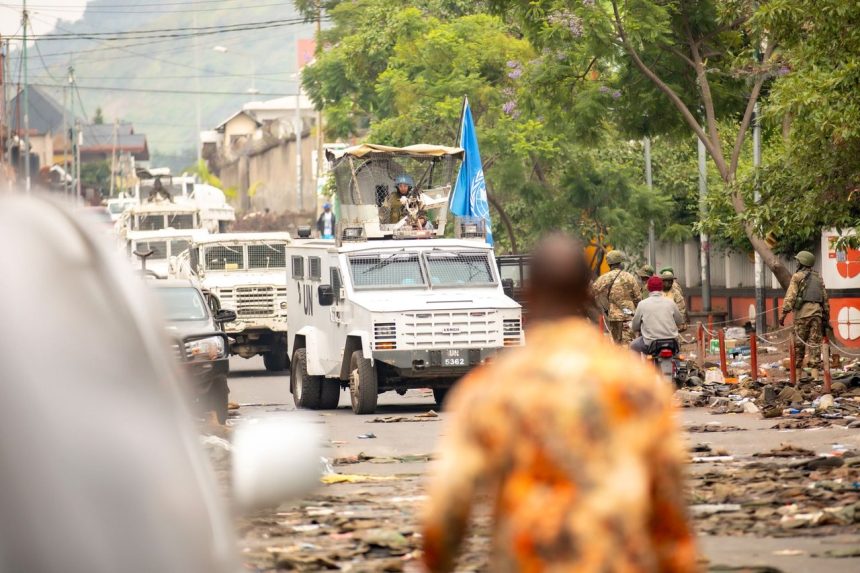
El Salvador’s President Nayib Bukele is associating his government with a high-profile offensive against gangs in Haiti, turning a security initiative in the Caribbean into a broader test of his regional influence. The move places the Salvadoran leader’s political brand at the center of a crisis shaped by armed groups, institutional weakness and deep social instability.
According to a report by The Associated Press, the initiative represents a political gamble for Bukele ahead of an election. His government has built much of its international profile around a forceful campaign against organized crime in El Salvador. By connecting that agenda to Haiti, the president is presenting his country as a potential contributor to regional security beyond its own borders.
The development matters because it links Central America and the Caribbean through a common political language: the promise that aggressive action against armed groups can restore order. For Bukele, the Haiti operation offers an opportunity to reinforce his image as one of the hemisphere’s most prominent advocates of a hard-line response to criminal organizations.
A security model moves beyond El Salvador
Bukele’s political identity is closely tied to the fight against organized crime in El Salvador. The Haiti initiative now gives that security agenda an international dimension. Rather than remaining a domestic policy associated with one government, the Salvadoran approach is being placed within a wider debate over how countries in the Americas should respond to gangs and other armed groups.
That shift can increase El Salvador’s visibility in hemispheric security discussions. It also gives Bukele a way to frame cooperation with Haiti as evidence that his government can offer more than political statements. The operation becomes part of a broader argument about whether countries facing violence should adopt tougher, more centralized and more confrontational strategies.
At the same time, the political value of the initiative depends on how it is understood by audiences in both countries. In El Salvador, the connection with Haiti can strengthen the president’s existing security narrative ahead of an election. In the region, however, it may generate questions about whether a national model can be adapted to a crisis with a different political, social and institutional context.
Why Haiti presents a distinct challenge
Haiti’s gang crisis is not simply an extension of the security problems faced by El Salvador. The two countries have different institutional histories, political circumstances and social conditions. The Associated Press report’s central significance is therefore not that it establishes a ready-made solution for Haiti, but that it highlights the risks of treating anti-gang policy as a model that can be transferred without major adaptations.
The Haitian operation places regional cooperation and political communication alongside one another. It may be presented as a practical response to armed groups, while also serving Bukele’s effort to project authority and influence. Those two objectives can overlap, but they are not identical. A security initiative may strengthen diplomatic ties while also becoming part of a domestic political campaign.
That tension is especially important because Haiti’s crisis has attracted attention well beyond the Caribbean. Any effort involving outside governments carries implications for sovereignty, accountability and the relationship between security forces and civilian institutions. The political meaning of El Salvador’s involvement will therefore extend beyond the immediate operation.
Implications for the Americas and Brazil
For governments in the Americas, the episode raises a broader question about the future of regional security cooperation. Countries confronting organized crime may increasingly look for partnerships that combine operational support with political visibility. Bukele’s role shows how an anti-gang campaign can become both a tool of diplomacy and a means of consolidating a leader’s international profile.
The issue is also relevant to the United States and Brazil, which follow developments involving security, migration, governance and institutional stability across the hemisphere. A deeper association between El Salvador and Haiti could influence discussions about how Caribbean and Central American governments respond to armed groups, and about the balance between urgent security action and the protection of democratic institutions.
For Bukele, the Haiti operation carries clear political advantages but also significant exposure. If it is seen as meaningful regional cooperation, it may strengthen El Salvador’s position in hemispheric security debates. If it is interpreted mainly as political branding, it could intensify scrutiny of the president’s effort to export his security image.
The Associated Press published its report on November 11, 2026. Its account establishes the political importance of Bukele’s association with the Haiti offensive, while the larger regional debate will depend on how the initiative develops and how governments in the Americas assess the applicability of El Salvador’s security approach.