



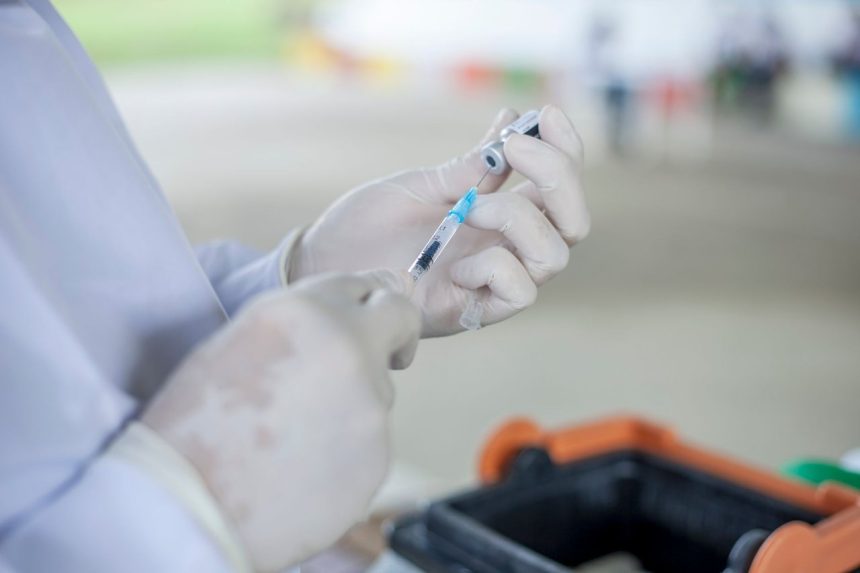
Brazil began a coordinated measles vaccination campaign on November 7, 2026, in municipalities located along the country’s triple border with Peru and Colombia. The operation covers Tabatinga, Benjamin Constant, São Paulo de Olivença and Atalaia do Norte, in Amazonas state, an area where movement between neighboring countries makes disease surveillance and immunization more difficult.
According to Agência Brasil, the Brazilian Ministry of Health is directing vaccination teams to locations with intense population circulation. The effort includes ports, river communities, Indigenous areas, schools and markets, as well as household visits. The strategy is designed to take vaccination services closer to residents in communities that may be difficult to reach through conventional health facilities.
Why the triple border matters
Border regions are strategically important in measles prevention because people living in or traveling through them may cross national boundaries as part of their daily lives. In the Amazon, rivers and local transport connect communities that are separated by international borders but remain closely linked socially and economically. That mobility can complicate efforts to identify vaccination gaps and monitor possible transmission.
The municipalities included in the campaign sit in a region connected to Peru and Colombia. For public-health authorities, this means that immunization coverage cannot be considered only within the limits of one city or one national system. A person moving between river communities, ports and urban areas can interact with several health networks, making coordination and the rapid delivery of vaccines especially relevant.
The campaign’s focus on ports and river communities reflects that geographic reality. Schools and markets are also important locations for reaching people who gather regularly, while household visits allow health teams to contact residents who may not attend a fixed vaccination site. Indigenous areas require outreach adapted to communities that may be geographically remote and separated from larger municipal centers.
A response to measles across the Americas
The mobilization comes as measles advances in the Americas, increasing concern about transmission across international borders. The disease is highly relevant to regional health systems because outbreaks can move through areas where people travel frequently and where access to medical services is uneven. In this setting, border vaccination campaigns serve both a local purpose and a wider regional function.
Brazil’s action illustrates how public-health measures in the Amazon can have consequences beyond the municipalities where they are carried out. Higher vaccination coverage in border communities can strengthen protection for residents, travelers and workers while improving the ability of health teams to identify possible cases. The operation also places attention on areas where national borders do not reflect the practical movement of the population.
The information released about the mobilization does not establish a newly declared national emergency in Brazil. Rather, it describes a targeted vaccination effort in municipalities near Peru and Colombia, organized around locations and communities considered important for reaching people and preventing measles transmission.
What the campaign signals for regional cooperation
The operation underscores the need for countries in South America to consider border health as a shared concern. Brazil, Peru and Colombia are connected by communities, rivers and routes that can make disease prevention a cross-border challenge. Even when a vaccination action is organized by one country, its effectiveness is linked to how well neighboring areas identify risks, reach their own populations and exchange information.
For Brazil, the campaign also shows why a single vaccination point may not be enough in the Amazon border region. By combining work at ports, schools, markets, river communities, Indigenous areas and homes, health teams are using several channels to reach people whose routines and locations vary. The approach places territorial access at the center of measles prevention.
The campaign began in Amazonas on November 7, 2026, with action in Tabatinga, Benjamin Constant, São Paulo de Olivença and Atalaia do Norte. Its broader significance lies in connecting immunization with border management and regional public health. In a continent where communities frequently cross national frontiers, preventing measles depends not only on vaccines, but also on the ability to reach mobile populations in the places where they live, study, work and travel.