



Mexico will introduce nationwide restrictions on cellphone use in public and private basic education schools beginning November 3, 2026. The measure will cover the school day, including classes, recess and other periods on school grounds, with limited exceptions for educational activities, emergencies and other situations defined by each school community.
President Claudia Sheinbaum announced the policy on September 21, following an agreement involving federal and state education authorities and consultations with teachers. The Office of the President of Mexico presented the initiative as an effort to support concentration, learning, mental health, interpersonal relationships and students’ overall development.
How the cellphone restrictions will work
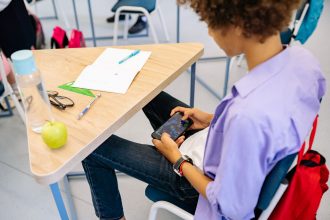
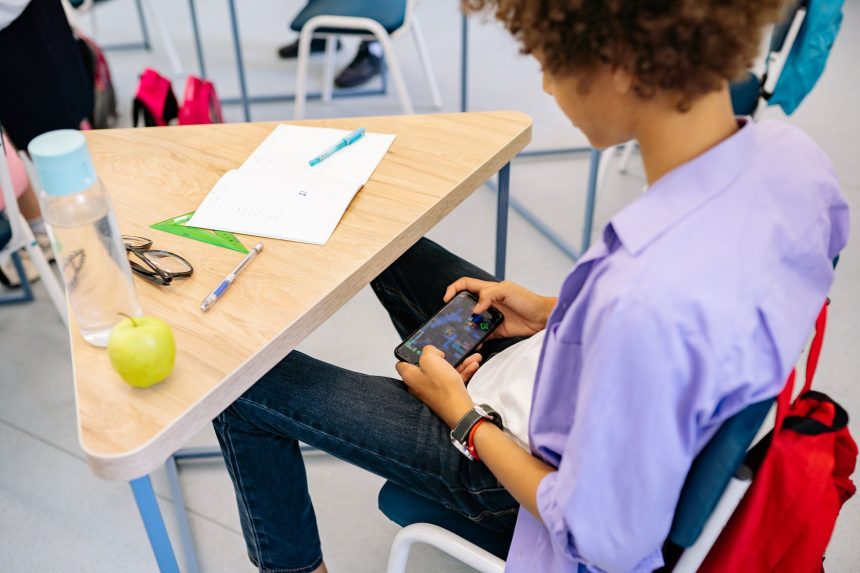
For students in basic education, cellphone use will not be permitted during the school day unless it is part of a previously planned educational activity led by teachers. Devices may also be used in emergencies or under other exceptional circumstances established through the school community’s rules.
The policy applies to both public and private schools across Mexico. According to implementation details released by Mexico’s Secretariat of Public Education, the restrictions are intended to cover the full school day rather than only classroom instruction. This means that students will generally be expected to remain without cellphone access during recess and other scheduled periods as well.
The regulation does not represent a complete ban on technology in education. Teachers may still incorporate mobile devices into planned lessons when their use serves a clear pedagogical purpose. The emergency exception also recognizes that schools may need to respond to urgent situations involving students, staff or the wider school community.
Different rules for high schools and universities
Mexico’s approach will vary according to the level of education. While basic education will have the most restrictive framework, high schools will have greater flexibility to establish rules for safe and responsible educational use of cellphones.
Universities, meanwhile, will be encouraged to promote responsible digital citizenship. The distinction reflects an effort to create different expectations for younger students and older learners, rather than applying identical restrictions across the entire education system.
Reuters reported that the new policy will begin on November 3 and will distinguish between basic education, high schools and universities. That structure leaves institutions with different responsibilities depending on the age of their students and the educational setting in which cellphone use occurs.
Questions for schools and families
The implementation of the restrictions will require schools and families to understand how the rules operate in daily practice. The national policy establishes when cellphone use is limited and identifies exceptions, but schools will also need to communicate their own procedures to students, teachers and parents.
Among the practical issues are how devices will be stored during the school day, how emergency contact with families will be handled and how schools will respond when a student uses a cellphone outside the permitted exceptions. The available government guidance makes clear that schools and their communities will have a role in defining exceptional situations and applying the rules.
Those questions may be especially important for parents who rely on mobile phones to communicate with their children during the day. The emergency exception means that the policy is not designed to eliminate communication in urgent circumstances, but ordinary contact will need to follow the procedures established by each school.
A broader debate over children and digital technology
Mexico’s decision places education authorities at the center of a wider discussion across the Americas about students’ access to smartphones, social media and digital platforms. The government argues that limiting cellphone use can help protect attention, learning, mental health and face-to-face interaction in schools.
At the same time, the policy preserves a role for technology when it is intentionally integrated into teaching. That balance is central to the regulation: cellphones are restricted as an unmanaged presence during the school day, but they remain available as tools for planned educational activities and emergency response.
The first major implementation date will be November 3, 2026. Until then, schools, teachers and families will have to prepare for the distinction between basic education rules and the more flexible approach for high schools and universities. The effectiveness of the policy will depend not only on the national framework, but also on how clearly each school communicates and applies its procedures.