


The U.S. Supreme Court on September 14, 2026, rejected the federal government’s request to suspend a lower-court injunction blocking new restrictions on mail-in ballots. The decision means the U.S. Postal Service cannot enforce the disputed requirements against the states involved in the case before the November 2026 midterm elections.
The ruling came as voting had already begun in some parts of the United States. Election officials had warned that a last-minute change to ballot procedures could disrupt systems already established for the election, according to the Associated Press.
What the Supreme Court decided
In its docket entry in United States Postal Service v. California et al., the Supreme Court denied the government’s application to stay the lower-court injunction. The justices stated that the federal government was unlikely to succeed on the merits of its challenge and that the balance of equities did not support emergency relief.
Justice Brett Kavanaugh issued a concurring opinion. Justices Samuel Alito and Clarence Thomas dissented. The decision addresses the government’s emergency request to put the restrictions into effect while the broader legal dispute continues. It does not constitute a final ruling on every question involving the executive order or the Postal Service rule.
The official Supreme Court docket records the September 14 decision and the separate opinions. The case remains part of a wider legal conflict over the federal government’s authority to establish election-related requirements and the states’ role in administering elections.
Restrictions linked to Trump executive order
The disputed requirements were connected to Executive Order 14399, signed by President Donald Trump on March 31, 2026. The order sought to establish new federal standards involving ballot envelopes, voter-data submissions and the processing of election mail.
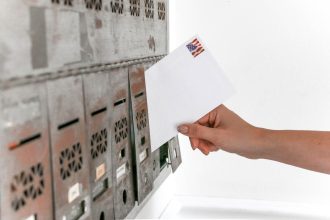
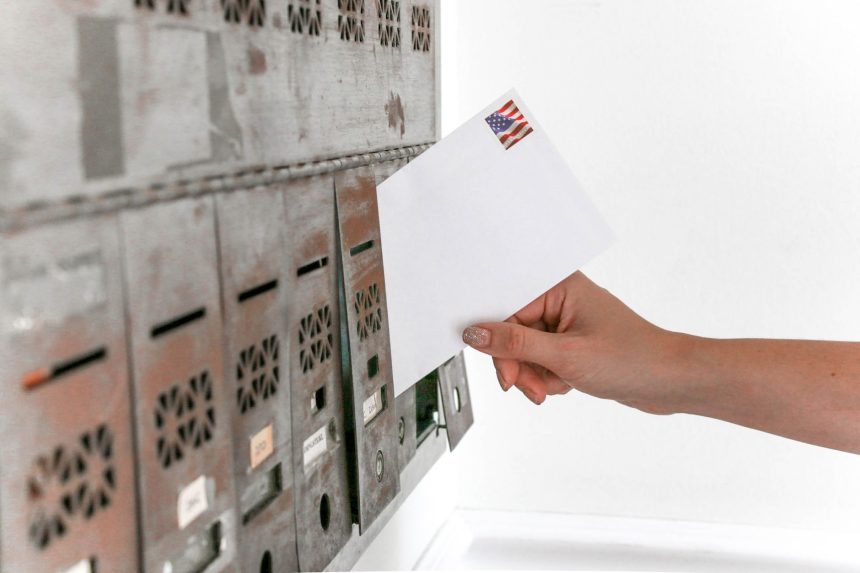
Under the proposed system, the Postal Service could refuse to transmit ballots that did not comply with the new requirements. The administration’s effort to revive those rules was challenged in court, leading to the preliminary injunction that the Supreme Court declined to suspend.
Background presented in the Court’s earlier opinion in Trump v. California describes the executive order and the proposed changes to federal mail-ballot procedures. That opinion is available through the U.S. Supreme Court.
Impact on voters and election officials
For voters in the states covered by the injunction, the immediate effect is that the challenged federal requirements will not be applied before the November election. Mail-ballot procedures will therefore continue under the rules and systems already in place, rather than under the proposed standards tied to the executive order.
The decision also gives election administrators greater certainty while ballots are being sent, returned and processed. The Associated Press reported that Alabama, North Carolina and Wisconsin had already begun sending mail ballots while the proposed federal system was not fully operational. A last-minute overhaul could have required officials, voters and postal workers to adjust to new procedures during an active election period.
For the Postal Service, the ruling prevents enforcement of the disputed requirements against the states involved in the case while the litigation proceeds. It does not eliminate the underlying legal dispute or determine whether the federal government will ultimately prevail on the merits.
Why the ruling matters for the 2026 midterms
Mail voting is widely used across the United States, making changes to ballot handling and postal processing consequential for voters and election offices. The case also illustrates the continuing tension between federal power and state authority over election administration.
The November 3, 2026, midterm elections will take place under procedures that remain in force after the Supreme Court’s emergency decision. For now, the ruling preserves the status quo in the states covered by the injunction and prevents the administration from imposing the contested requirements through the Postal Service before the election.
Further proceedings will determine the broader legal questions surrounding Executive Order 14399 and the Postal Service’s proposed rule. Until then, the Supreme Court’s September 14 action is best understood as a decision on emergency relief, not a final resolution of the dispute.