






Antiques spark immediate interest, but they also require technical criteria from the very beginning, as emphasized by Cristiane Ruon dos Santos. Initial enthusiasm, although positive, often leads to impulsive decisions that compromise the quality of a collection. At the same time, a lack of practical knowledge can result in poor choices that directly impact the value and authenticity of the pieces. With this in mind, this article will address the most common mistakes made by beginners and how to avoid them.
Why do beginners make mistakes when collecting antiques?
Entering the world of antiques is often guided more by emotion than by technical analysis. This behavior is common because collectors have not yet developed enough visual and historical knowledge to distinguish authentic pieces from reproductions or items of low cultural value.
Moreover, many beginners fail to understand that antiques are not defined solely by the age of an object. According to Cristiane Ruon dos Santos, factors such as provenance, condition, and historical relevance are decisive. Therefore, when these criteria are ignored, the risk of acquiring items with no real value increases significantly.
What are the most common mistakes when building a collection?
When structuring a collection, certain mistakes frequently occur and end up limiting the qualitative growth of the collection. According to Cristiane Ruon dos Santos, these errors are directly related to a lack of planning and the absence of clear criteria. Among the main issues are:
-
Buying impulsively: quick decisions without proper analysis result in pieces with little relevance or unverified authenticity;
-
Ignoring provenance: the absence of a documented history compromises credibility and market value;
-
Overlooking condition: structural damage or poor restorations reduce the item’s value;
-
Focusing only on aesthetics: beauty does not guarantee historical importance or rarity;
-
Not researching the market: lack of awareness of prices and trends leads to overpaying for common items.
Although these mistakes are common, they can be avoided through continuous study and careful observation. Over time, collectors develop a more technical and less impulsive perspective.
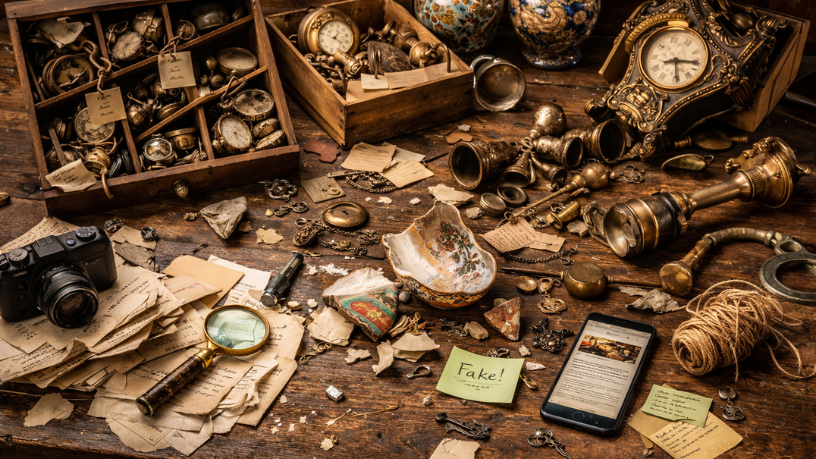
How can you avoid losses when investing in antiques?
Avoiding losses in the antiques market requires more than caution—it requires a method. As highlighted by Cristiane Ruon dos Santos, building a solid collection depends on progressive knowledge and well-informed decisions. First, it is essential to conduct research before any acquisition. This includes understanding the historical context of the piece, comparing prices, and identifying signs of authenticity.
In addition, visiting fairs, antique shops, and exhibitions helps expand the collector’s visual and technical knowledge. Another important factor is documentation. Pieces with certification or verified provenance tend to retain and even increase their value over time. In this way, collectors reduce risks and increase the security of their investments.
How to build a consistent antique collection?
Building a consistent collection requires a long-term vision. With this in mind, collectors should define a focus—whether by historical period, type of object, or geographic origin—avoiding dispersion and random purchases. Furthermore, organizing the collection is essential, as emphasized by Cristiane Ruon dos Santos. Cataloging items, recording information, and keeping track of acquisitions allow for more efficient collection management.
This level of care also facilitates future appraisals and potential negotiations. Another relevant aspect is preservation. Proper environments, humidity control, and correct cleaning practices are key factors in maintaining the value of antiques over time. Without these precautions, even rare pieces can lose value.
Building knowledge to avoid recurring mistakes
Finally, avoiding mistakes in the world of antiques depends not only on experience but also on continuous learning. Developing a critical eye transforms the way collectors evaluate each piece and enables more strategic decision-making.
Thus, understanding the most common mistakes allows collectors to anticipate risks and build a more solid, coherent, and valuable collection over time—making the process not only safer but also more enriching from a cultural and historical perspective.
Author: Diego Rodríguez Velázquez