




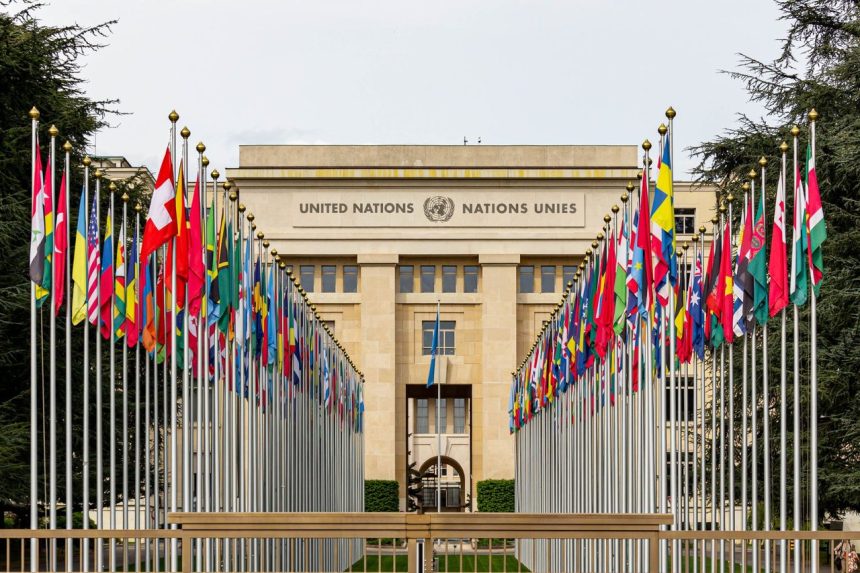
Brazil, Mexico and Panama are pressing for international negotiations on lethal autonomous weapons as governments meet in Geneva for UN-backed discussions on how to address military systems that can select and attack targets with limited or no direct human intervention. The initiative places Latin American diplomacy at the center of a debate over artificial intelligence, armed conflict and the limits of automation in military decision-making.
According to The Associated Press, Brazil, Mexico and Panama joined Austria, Ireland and New Zealand in submitting a proposal calling for negotiations on a legally binding agreement. The proposal was submitted in October 2026, while the talks were reported as taking place during the week of November 16, 2026.
What the Geneva talks are discussing
The current meeting is not the announcement of a final treaty. Its central question is whether governments should move from discussions toward formal negotiations on an international framework for autonomous weapons. That distinction matters because the countries involved are still debating the possible scope and legal status of future rules.
A legally binding agreement could establish shared standards for systems capable of operating with limited or no direct human intervention in the decision to attack. The proposal connects the development of advanced military technology with international humanitarian law, which governs conduct during armed conflict. The discussions therefore involve both technological capabilities and the responsibilities of governments that develop, acquire or deploy such systems.
The debate also concerns the role of human judgment in military operations. Autonomous weapons raise questions about how much control people should retain over the identification of targets and the use of force. The Geneva process offers governments a forum to consider whether existing international obligations are sufficient or whether a specific agreement is needed for these technologies.
Why Latin American governments are involved
Brazil, Mexico and Panama are not participating only as observers of policies shaped by the largest military powers. By joining the proposal, the three countries are presenting themselves as diplomatic actors in a global discussion about the rules governing emerging defense technologies.
Their involvement gives the initiative a clear hemispheric dimension. For Latin America, the issue links foreign policy with military procurement, cybersecurity, artificial intelligence and the interpretation of international humanitarian obligations. It also shows how countries without the same military weight as the United States or Russia can seek influence through multilateral negotiations.
The proposal brings regional concerns into a process that could affect future standards across the Americas. Any agreement reached through the talks could influence how governments assess military AI, how defense institutions define human responsibility and how countries address the legal consequences of attacks carried out by increasingly automated systems.
A divide over limits on military technology
The negotiations could expose a divide between countries seeking stronger international restrictions and major military powers that want to preserve room to develop and deploy advanced technologies. The Associated Press reported that the United States and Russia are among the powers seeking to maintain space for those activities.
That divide does not necessarily determine the outcome of the Geneva discussions. The immediate decision is whether governments will begin negotiations, not whether they will already agree on the final content of a treaty. The process may therefore become a test of whether countries can establish common principles before the technology becomes more deeply integrated into military planning.
The disagreement also reflects different views of security. Supporters of a binding framework can argue that clear rules are needed before responsibility becomes harder to assign when an autonomous system selects a target. Governments that favor preserving technological flexibility may view broad restrictions as a potential obstacle to defense development and national security planning.
Implications for the Americas and Brazil
For Brazil, participation carries significance beyond the Geneva meeting. The country is helping shape a multilateral initiative that could affect future discussions about weapons procurement, military innovation and compliance with international humanitarian law. Mexico and Panama are likewise contributing to a regional presence in a debate often associated with major powers and advanced military programs.
The issue is relevant to the broader Americas because decisions made in the UN-backed process could establish expectations for governments throughout the hemisphere. They could also influence how countries approach the relationship between artificial intelligence and the use of force, particularly as defense institutions evaluate new technologies and their operational risks.
The next stage will depend on whether participating governments agree to open formal negotiations on a legally binding instrument. Until then, the Geneva talks remain focused on defining the path forward. The proposal led by Brazil, Mexico, Panama, Austria, Ireland and New Zealand has made the central choice explicit: continue deliberating without a binding framework or begin the diplomatic process of trying to create one.
The development is part of the regional and hemispheric coverage available through The Associated Press’s Latin America and Caribbean coverage, which places the initiative within a wider examination of political, security and diplomatic issues affecting the Americas.