





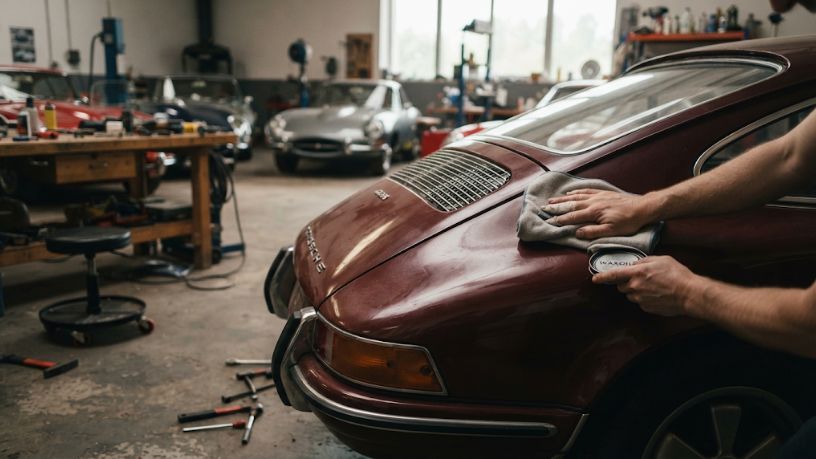
As classic car collector Mario Augusto de Castro explains, a vintage vehicle requires care that goes far beyond its mechanical components, and its original paint is one of the elements that most strongly defines its historical and market value. With that in mind, keeping the paint intact requires consistency, not miracles.
From proper washing techniques to the right storage environment, small choices can prevent the type of deterioration that eventually leads to repainting—a process that can significantly reduce a vehicle’s originality value. Below, we explore simple cleaning and maintenance practices that help protect the surface without compromising its authentic character.
Why Does Original Paint Have Such a Strong Impact on a Classic Car’s Value?
The collector car market regards original paint as a record of authenticity. Even a professionally executed repaint can erase signs that help verify the vehicle’s true age and indicate the absence of major structural repairs in the past. For this reason, experienced buyers view original paint as evidence of preservation rather than merely an aesthetic detail.
This perception explains why minor visible wear often has less impact on a final valuation than a flawless, freshly repainted surface. According to Mario Augusto de Castro, originality communicates a history of careful preservation, while repainting may suggest that something needed to be corrected.
Proper Cleaning: The First Step in Preventing Wear
Washing is one of the moments when a car’s paint is most vulnerable, which is why the technique used deserves special attention. Excessive water, rough cloths, and generic household cleaning products can accelerate paint oxidation and compromise its original shine over the years.
With this in mind, Mario Augusto de Castro notes that the ideal approach is to wash the vehicle in the shade, using soft microfiber cloths and gentle, one-directional movements. Circular rubbing should be avoided because it can gradually create accumulated micro-scratches.
Which Products and Materials Should Be Avoided When Cleaning?
Not every product marketed as being “for cars” is suitable for older paint finishes, which were formulated using techniques that differ from those used today. Before applying any product to the bodywork, it is important to consider its composition and the effects it may have on paint layers that have become more sensitive over time. Some items that may pose risks include:
- Common household detergents: They may contain harsh cleaning agents that strip away the paint’s natural shine.
- Hard foam sponges: They can create fine scratches that may be almost imperceptible at first.
- Waxes with excessive silicone: Repeated applications may dry out or negatively affect older paint finishes.
- Rough fabric cloths: They can drag dust particles across the surface, causing an effect similar to fine sandpaper.
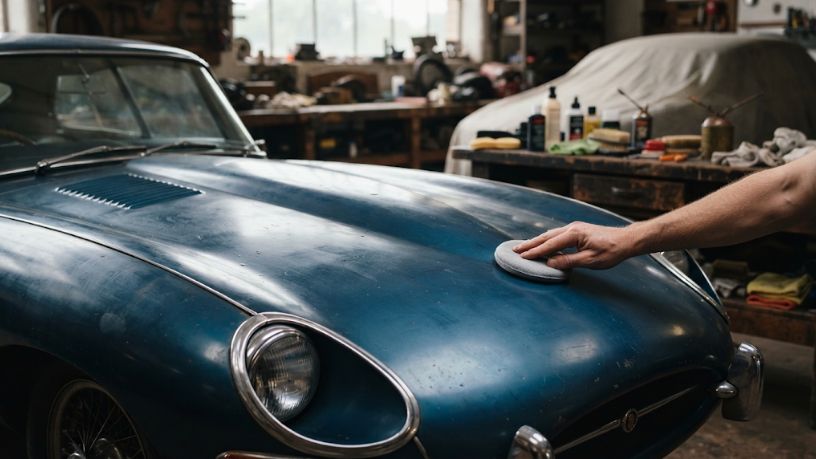
Replacing these items with alternatives specifically designed for classic automotive finishes can help preserve the original paint layer for much longer. The materials used, more than the frequency of cleaning itself, can have a major impact on the final result.
Storage: Mario Augusto de Castro Explains How the Environment Protects the Paint
Storing a vehicle in an unsuitable environment can undermine all the care taken during cleaning. Constant humidity encourages blistering beneath the paint, while direct sunlight accelerates fading and the loss of elasticity in the protective layer.
As classic car collector Mario Augusto de Castro emphasizes, a well-ventilated environment with a stable temperature and a breathable car cover can make a greater difference in preserving the paint than expensive products applied only occasionally.
In practice, maintaining consistent environmental conditions is more effective than relying on isolated interventions. In addition to temperature, the type of cover used also matters. Non-breathable plastic covers can trap moisture and rub against the surface when moved, an effect that many people fail to associate with stains that may later appear in the paint.
Preservation Is a Daily Choice, Not a One-Time Event
Preserving the original paint of a classic car does not depend on a single procedure, but rather on decisions repeated over months and years. Every improper wash and every hour spent under direct sunlight contributes to deterioration that, on its own, may seem insignificant.
Collectors who understand this principle treat regular maintenance as part of the vehicle’s value rather than as a secondary task. Ultimately, it is this consistency—not one specific product—that helps prevent the future need for repainting and keeps the history preserved in the vehicle’s bodywork intact.